How to Fix a Lionel Train That Keeps Shorting Out or Tripping the Transformer: Complete 2026 Troubleshooting Guide
November 18, 2026
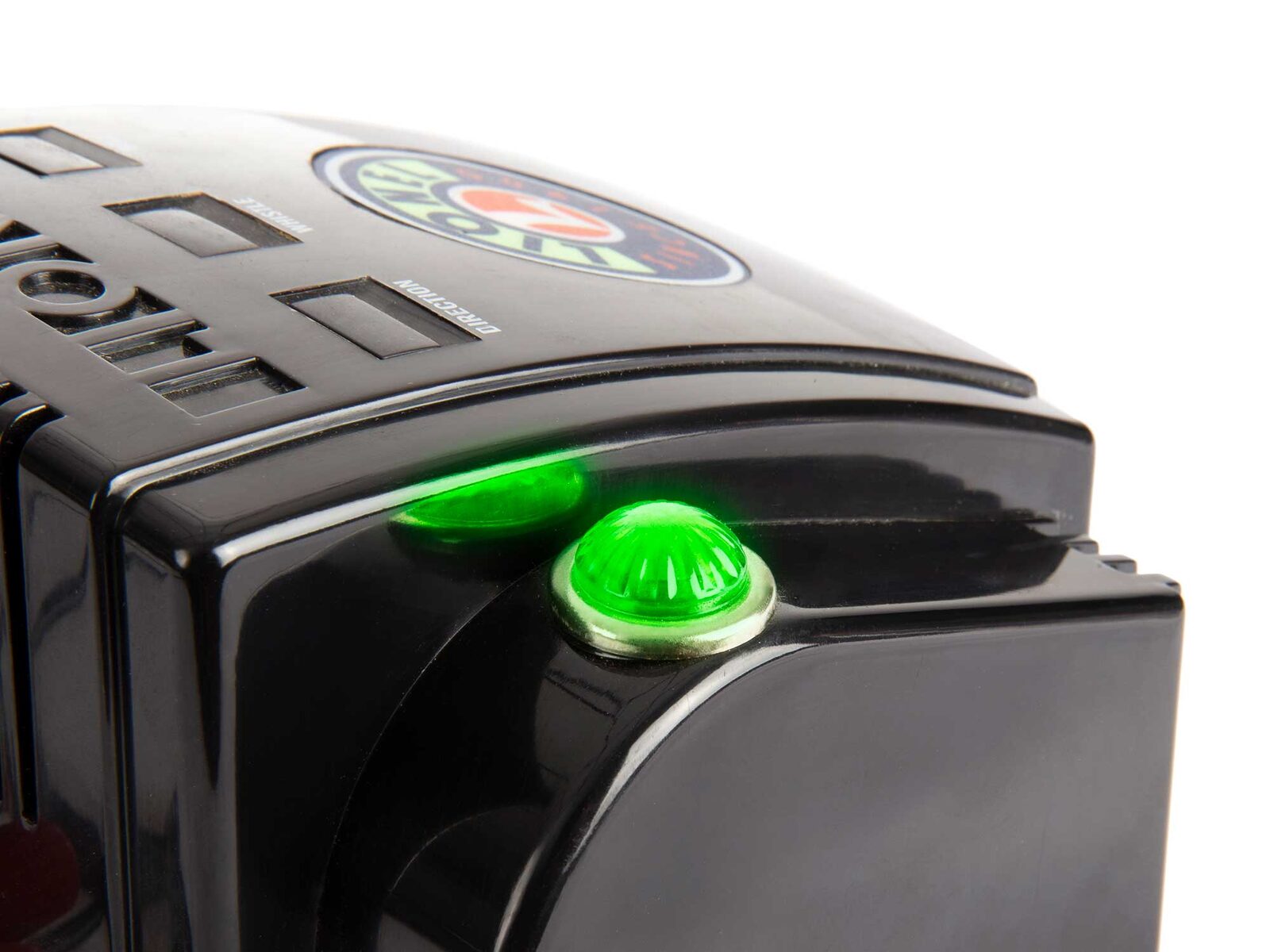
You turn the throttle, the train lurches a few inches, and everything goes dead. Or it runs fine for a lap and then the transformer clicks off, comes back, and clicks off again. That is a short circuit or an overload, and it is one of the most common problems on any Lionel layout, especially a holiday loop set up in a hurry around the tree. This guide explains how to tell a short from an overload, the seven most common causes, and a five-step method to find the problem fast.
Safety first: a short circuit makes wires, rails and transformers hot. Turn the power off before you touch anything, and if you smell burning plastic or see a melted wire, stop and find the cause before you power up again.
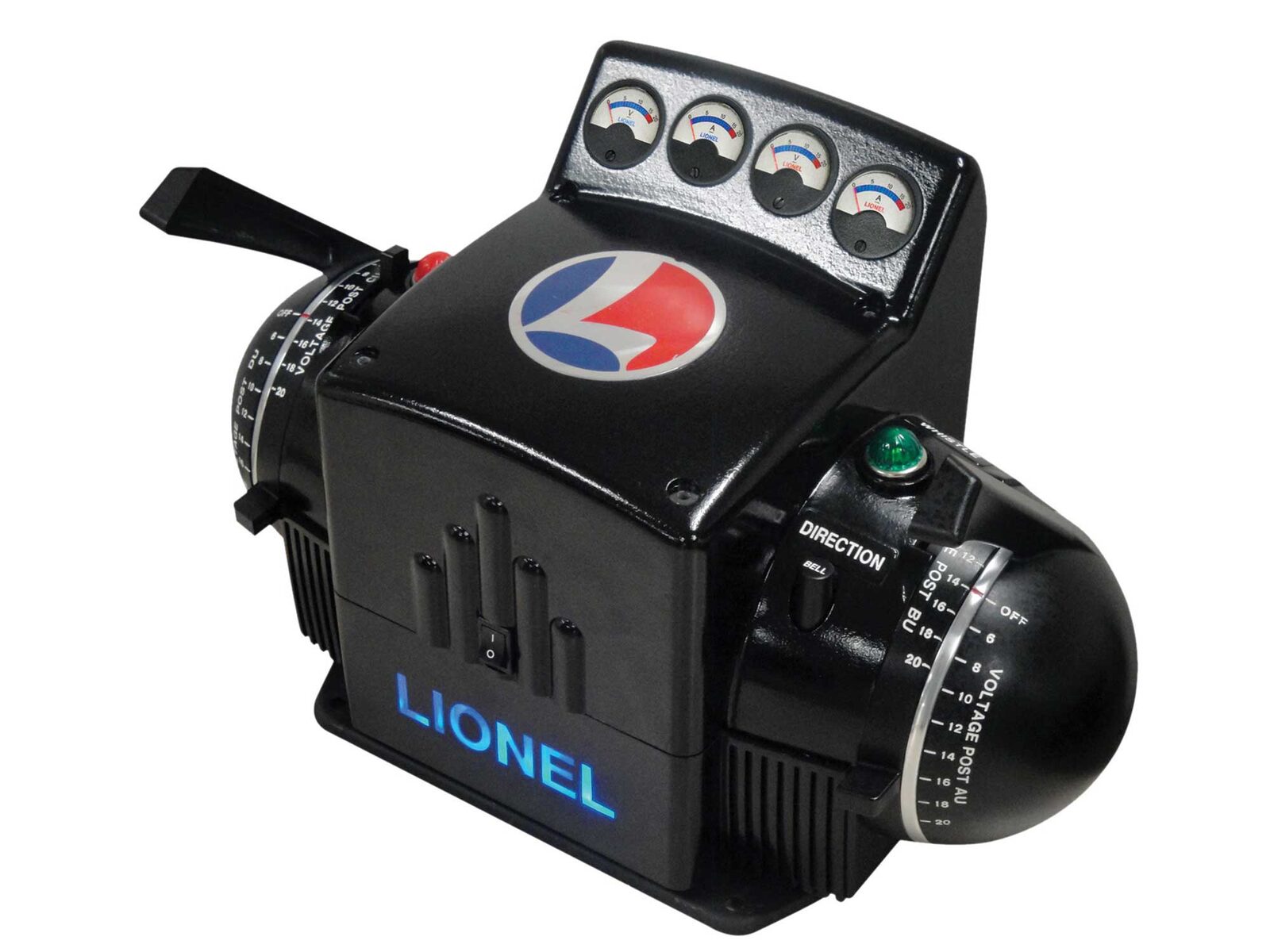
Short Circuit or Overload? How Your Transformer Reacts
On a three-rail Lionel layout, the center rail carries power and the two outside rails are the return. A short happens when something metal connects the center rail directly to an outside rail, so current flows without going through a motor or bulb. Your transformer protects itself by cutting the power:
- Modern Lionel transformers and power supplies use built-in electronic protection that shuts the output off when it senses a short. Clear the short and power comes back; check your manual for the exact reset steps for your model.
- Postwar transformers such as the ZW and KW use a thermal circuit breaker. It cuts out when it heats up and resets after it cools, so a short often shows up as power clicking off and on every few seconds.
The timing tells you which problem you have:
- Power cuts out instantly, even with no train on the track or the moment a train reaches one spot: that is a short circuit. Work through the causes below.
- Power cuts out after the train has run for a while, or only when you add a second train, lighted cars, smoke or accessories: that is more likely an overload, meaning you are asking more of the transformer than it can supply. Our transformer sizing guide shows how to add up what your layout draws.
The 7 Most Common Causes of a Short
1. A derailed wheel
This is the number one cause. One car with a wheel off the rail can touch the center rail and an outside rail at the same time, and the whole layout goes dead. Look along the entire train, not just the locomotive; the culprit is often the last car, a caboose on a curve or a car sitting on a switch. If cars keep coming off in the same place, our derailment guide covers the fixes.
2. Metal on the track
A screw, a dropped coupler pin, a paper clip, a key or a screwdriver lying across the rails will short them instantly. Around the Christmas tree, the usual suspects are tinsel, ornament hooks, foil wrapping and metallic ribbon. Run a hand or a flashlight along every section, including under bridges and tunnels.
3. Bent pins or a damaged track section
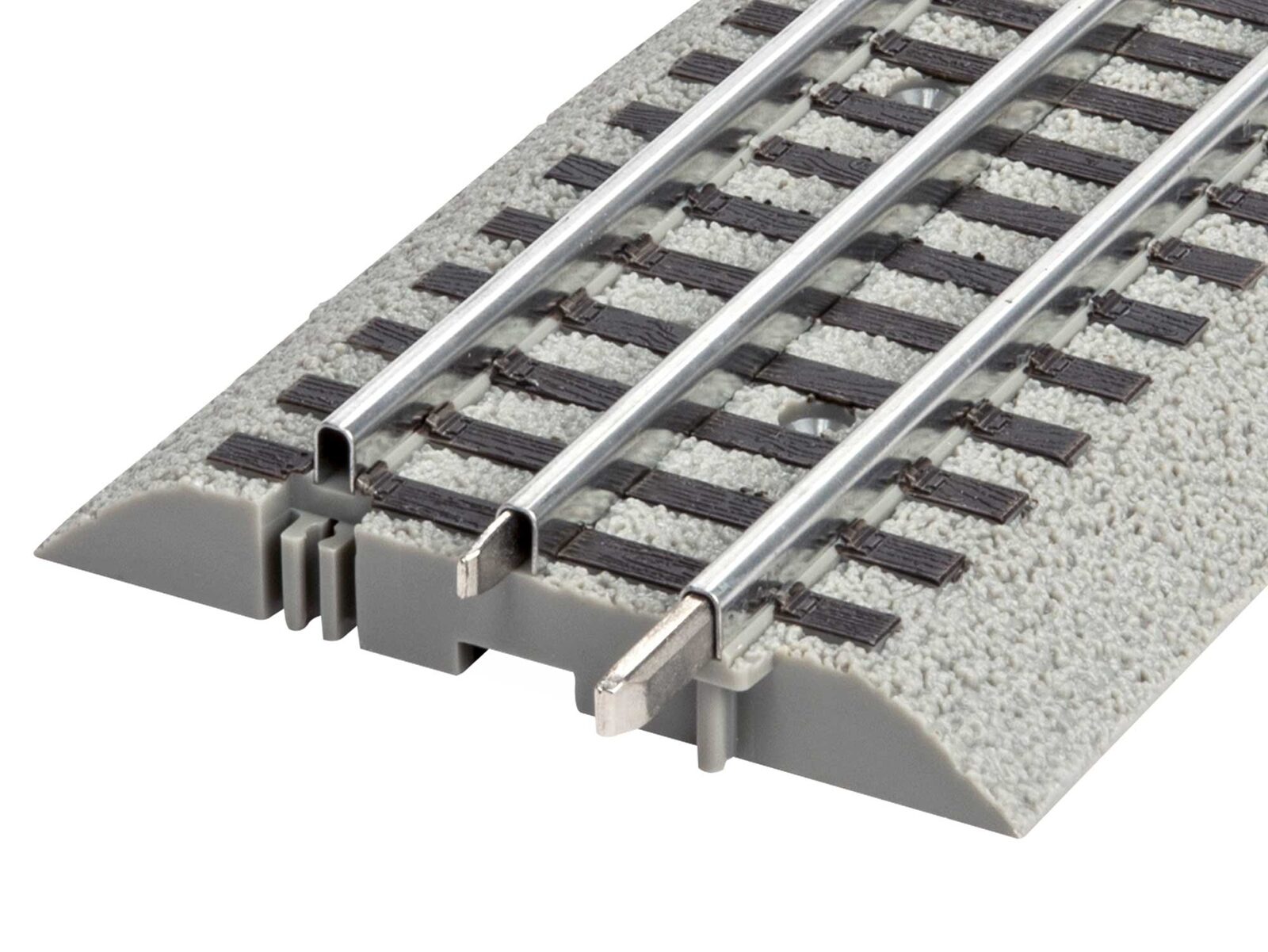
Track joints are a common hidden short. On FasTrack, a bent or pushed-in center-rail pin can touch an outside rail inside the roadbed. On older tubular track, a bent pin, a cracked rail or a missing insulator under the center rail can let the center rail touch the metal tie beneath it. Our guide to connecting FasTrack sections without gaps covers joining sections correctly.
4. A wiring mistake at a feeder
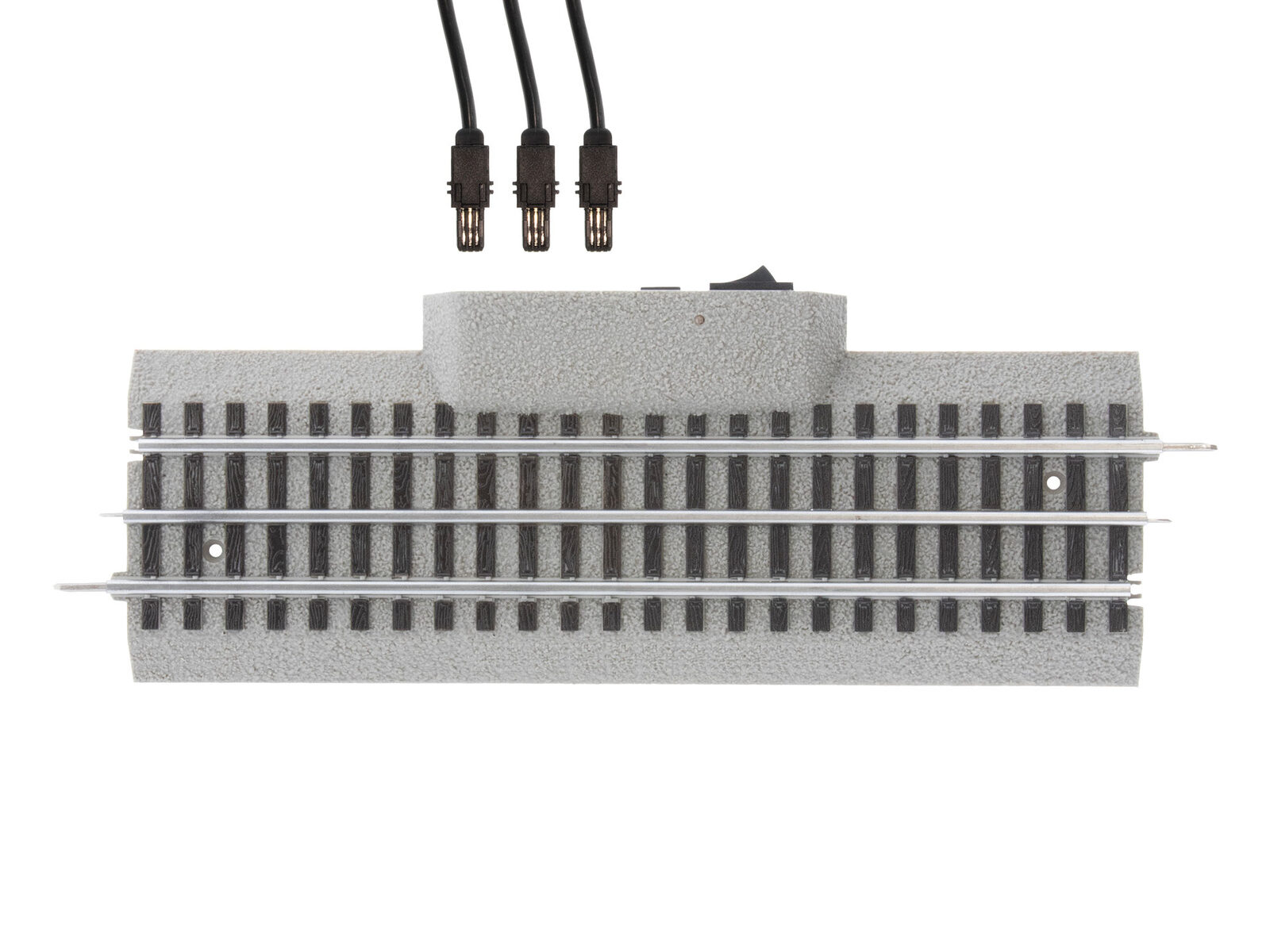
When you add a second lock-on or feeder wire, the center-rail wire must go to the same transformer terminal at every feeder, and the outside-rail wire to the other terminal. Swap them at one feeder and you have connected the two terminals straight through the rails, which is a dead short the moment you add power. Also check for a frayed wire, a staple through a wire under the table, or loose strands touching at a terminal. Accessories wired to a track output can short the track too. Our O-gauge wiring basics guide covers the right way to run feeders.
5. Switches and crossings
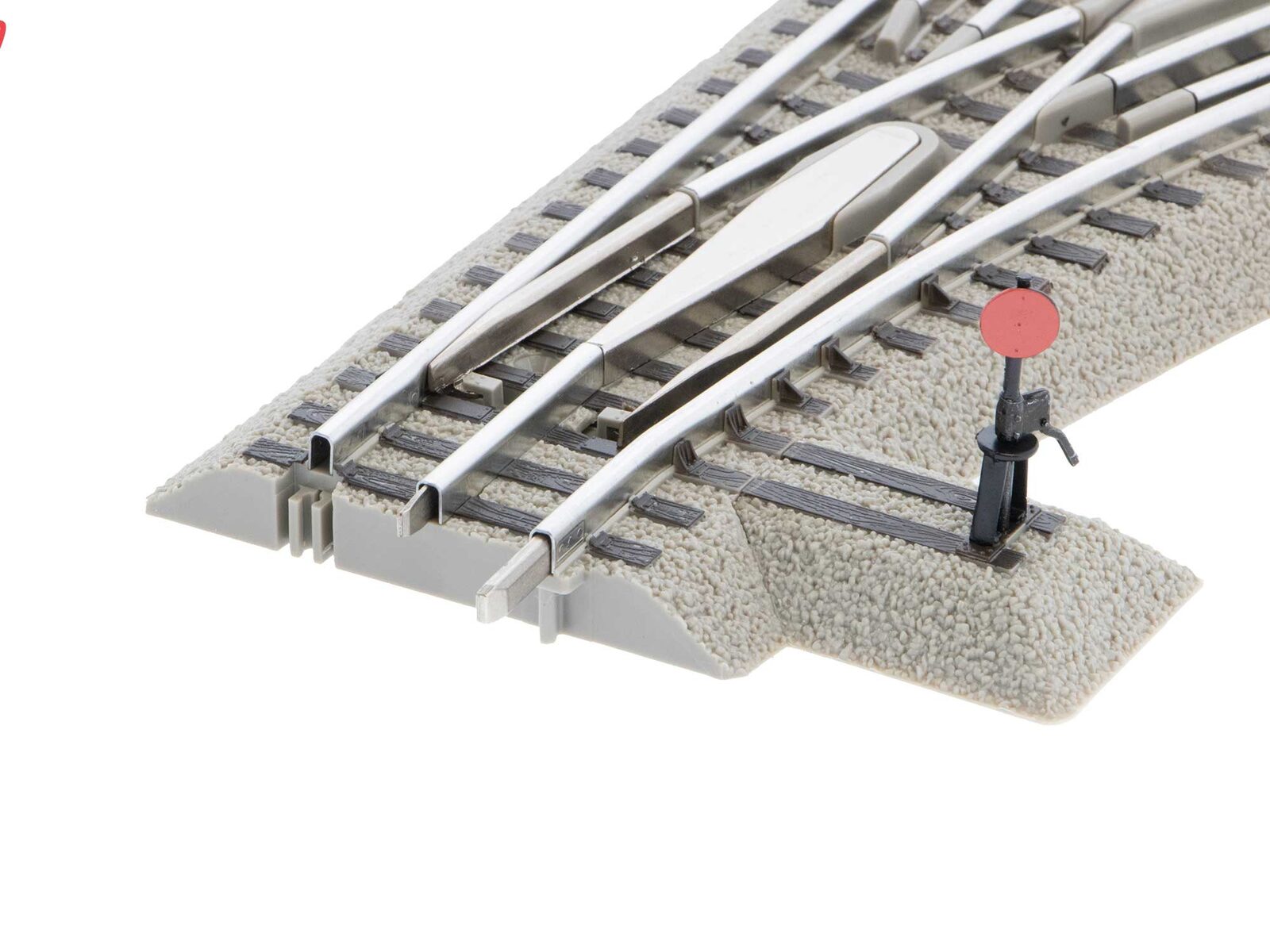
Switches and crossings pack a lot of metal into a small space, so they are common short locations: a wheel climbing the points, a switch thrown halfway, an out-of-gauge wheelset bridging the frog, or a wiring mistake on a remote switch or its controller. If the short happens only when a train crosses one switch, that switch is your prime suspect. Our guide to trains that stall on switches and dead spots covers related switch problems.
6. A short inside the locomotive or a car
If the layout runs fine until one engine or car goes on the track, the short is inside it. Common causes:
- A pickup roller or its bracket bent or loose so it touches the frame or an outside rail. See our pickup roller repair guide.
- A wire inside the shell with worn insulation touching the metal frame, often after the shell was removed and pinched it on reassembly.
- A lighted car, tender or caboose whose internal wiring or pickup has come loose.
Inspect with the power off. Unless you are comfortable working inside the shell, a modern command-control engine with an internal short is a job for a Lionel service provider.
7. Overload that looks like a short
A small transformer running a sound-equipped engine with smoke, a string of lighted cars and lighted accessories can hit its limit and shut down, especially on a starter set's power supply. If the power cuts out only after a while, or only with everything running at once, move accessories to their own power supply or step up to a bigger transformer.
How to Find the Short in 5 Steps
- Look first. With the power off, walk the whole train and the whole layout. Most shorts are a derailed wheel or something metal on the track, and you will see it.
- Take every train off the track and power up the empty layout. If the transformer still shuts off, the problem is in the track or wiring. If it stays on, the problem is in the trains.
- If it is the trains, put the locomotive on alone and power up, then add the cars one at a time. The car or engine that kills the power has the short.
- If it is the track, unplug every feeder except one and power up again. Still shorting? Split the layout in half by removing a section and test each half. Keep halving until you find the section, switch or feeder with the problem. Remove switches and accessories from the circuit one at a time.
- Use a multimeter if you have one. With the transformer disconnected and the track empty, set the meter to continuity or resistance and touch one probe to the center rail and one to an outside rail. You should not get continuity. Lighted bumpers, lighted terminal sections and accessories connected to the track can give a reading, so disconnect them first.
Preventing Shorts
- Keep metal tools, screws and holiday decorations off the layout, and keep tinsel away from a loop under the tree.
- Press track sections together fully and inspect pins every time you set up a temporary layout.
- Label your feeder wires so the center-rail wire always goes to the same terminal.
- Stop the train right away when it derails rather than letting it drag.
- Size your transformer for everything you run, with headroom to spare.
Setting up a train around the tree this year? See our picks for the best Christmas train sets for around the tree.
Frequently Asked Questions
Why does my Lionel transformer keep shutting off?
Either a short circuit, where something metal connects the center rail to an outside rail, or an overload, where the layout draws more power than the transformer can supply. If it shuts off instantly, look for a short. If it shuts off after running a while or with everything turned on, suspect an overload.
What is the most common cause of a short on a Lionel layout?
A derailed car. A wheel off the rail can touch the center rail and an outside rail at the same time. Check the whole train, including the last car.
Why does my postwar transformer click on and off?
Postwar transformers use a thermal circuit breaker that trips when it overheats and resets after it cools. Repeated clicking usually means a short or an overload is still present.
How do I find a short in my track?
Remove all trains and power up. If it still shorts, disconnect all but one feeder and split the layout into sections, testing each until you find the bad section, switch or wire.
Can a short circuit damage my train or transformer?
Protection circuits and breakers are designed to prevent damage, but repeated or sustained shorts create heat and can damage wiring, track and electronics. Find and fix the cause rather than resetting over and over.
Newsletter
Weekly O-gauge tips & reviews
New reviews, layout ideas, and hobby news, straight to your inbox.