Best O-Gauge Transformers for Lionel Trains: Complete 2026 Buyer's Guide
August 22, 2026
Which transformer should you buy for your Lionel O-gauge layout? For any hobbyist starting out or upgrading their existing power supply, the transformer question is one of the most consequential purchases you'll make — it determines how many locomotives you can run, whether you can add accessories, whether you'll have room to grow your layout, and how much you'll spend on power supply over the long term.
This complete 2026 buyer's guide walks through Lionel and third-party transformer options, from entry-level 40-watt supplies through premium 400-watt power stations. You'll learn how to size a transformer to your actual layout needs, when to buy new vs used, and which specific transformer fits which type of O-gauge operator.
What a Transformer Actually Does
Before comparing specific transformers, understand what you're buying:
Power output (watts): Total electrical power the transformer can deliver. Higher wattage supports more locomotives, more accessories, and larger layouts. Measured in watts (VA).
Voltage output (volts AC): O-gauge transformers deliver variable AC voltage, typically 0-18 volts, that controls locomotive speed. Higher voltage = faster locomotive.
Amp output (amperes): Current capacity. Modern locomotives with sound and smoke draw 1-3 amps each. LEGACY and LionChief Plus 2.0 pieces with active sound and smoke can draw 2-4 amps briefly.
Circuit breaker: Overcurrent protection that trips when the layout draws more current than the transformer supports. Prevents damage to trains and transformer.
Auxiliary outputs: Additional voltage outputs (typically 12-18V AC or 12V DC) for powering accessories like turnout motors, building lights, and animated accessories.
How to Size Your Transformer
The most common transformer sizing mistake is buying too small. General guidance:
1 locomotive, small layout (4x6 or smaller): 40-80 watts sufficient. Lionel CW-80 or Lionel PowerMaster 80 are standard choices.
1-2 locomotives, medium layout (4x8 to 5x10): 100-180 watts. Lionel 180-watt PowerMaster or MTH Z-4000 (400W) are good choices. Bigger is better if budget allows.
2-3 locomotives, larger layout (up to 8x12) with modest accessories: 180-400 watts. MTH Z-4000, Lionel ZW-L (620W), or dedicated PowerHouse units start making sense.
Multiple locomotives, large or multi-level layouts, significant accessory loads: 400+ watts. Multiple PowerHouse units, MTH Z-4000, or Lionel ZW-L become essential.
Simple rule: Add up estimated locomotive draw (2-3A per LEGACY locomotive, 1-2A per LionChief), plus accessory load (typically 1-3A total for a modest accessory installation), multiply by 18V to get watts. Buy a transformer with 25-50% headroom above that number.
The Best Lionel Transformers for 2026
Lionel CW-80 (80 Watts)
The entry-tier standard. Lionel's current 80-watt transformer with basic operation and modest accessory support.
Power output: 80 watts total. Sufficient for one LionChief locomotive plus modest accessories.
Features: Handheld throttle, forward/reverse switch, whistle/bell button, one accessory output.
Typical price: $75-$95 new. $40-$65 used.
Pros: Cheap, simple, adequate for starter layouts, ubiquitous availability.
Cons: Only one locomotive at a time, limited accessory power, no cruise control features, no digital interface.
Best for: First layouts, Christmas trees, kids' layouts with one locomotive.
Lionel PowerMaster 180 (180 Watts)
The mainstream mid-tier choice. Modern Lionel 180-watt regulated power supply that's the default recommendation for most serious hobbyists.
Power output: 180 watts (10A at 18V). Handles 2-3 locomotives plus accessories comfortably.
Features: Digital output regulation, LionChief and LEGACY compatible, multiple output terminals, thermal protection.
Typical price: $199-$275 new. $145-$195 used.
Pros: Excellent regulated output, LionChief and LEGACY optimized, quiet operation, good long-term reliability.
Cons: Requires separate throttle (not included), no built-in accessory outputs (uses power distribution).
Best for: Medium layouts, LEGACY and LionChief Plus 2.0 users, anyone wanting good regulated power without going premium.
Lionel ZW-L (620 Watts)
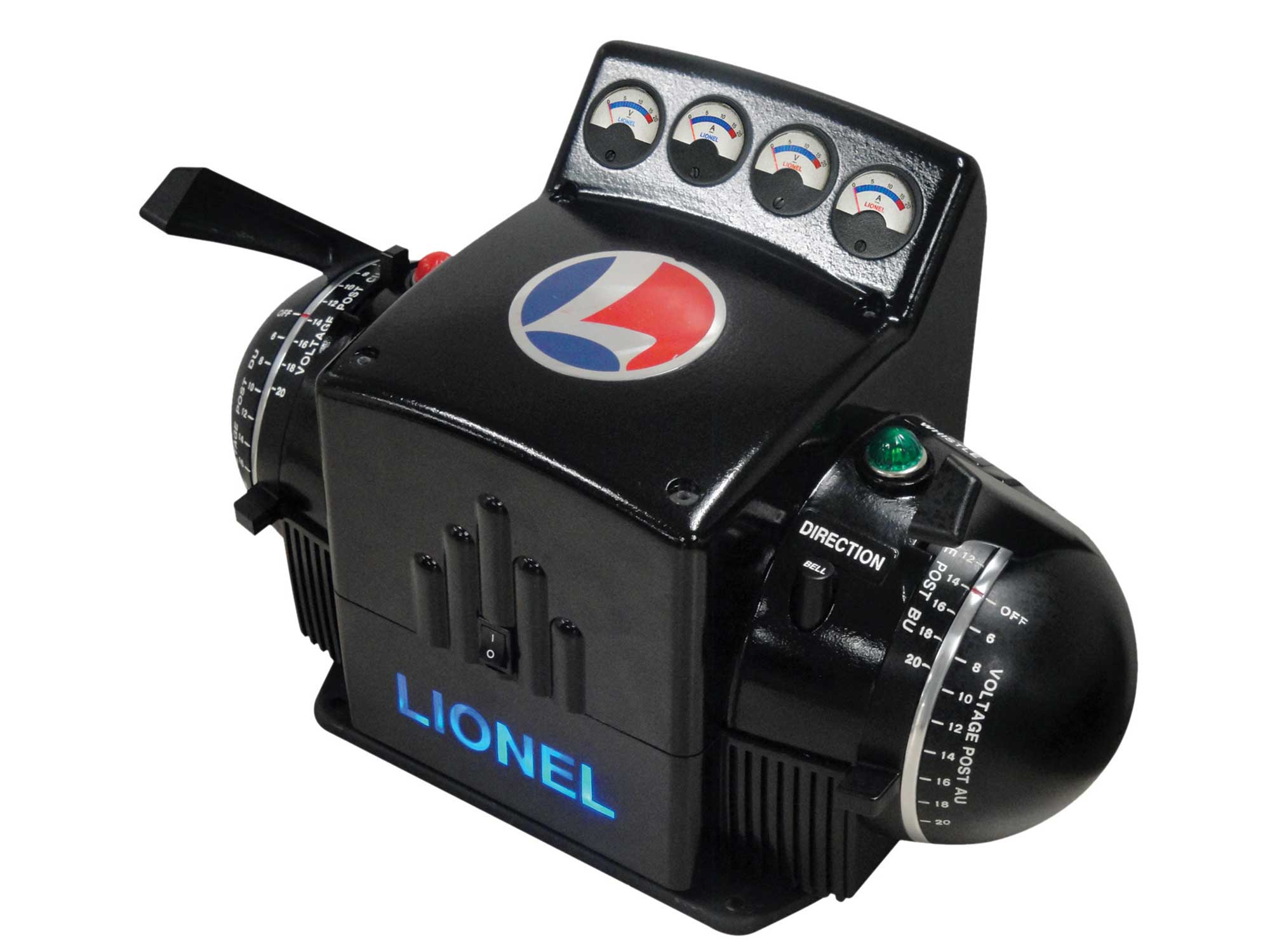
Modern reimagining of the classic postwar ZW transformer. Multiple power throttles, massive power output, integrated horn/whistle/bell controls.
Power output: 620 watts (34A at 18V). Handles 4-6 locomotives plus large accessory loads.
Features: Four independent throttles, LionChief and LEGACY compatible, multiple accessory outputs, integrated horn/whistle controls, digital voltage display.
Typical price: $650-$799 new. $400-$550 used.
Pros: Massive power output, four throttles for multi-operator sessions, LEGACY optimized, throwback ZW aesthetics with modern regulation.
Cons: Large physical size, premium pricing, overkill for smaller layouts.
Best for: Serious layouts (8x12+), multi-operator sessions, large accessory installations.
MTH Z-4000 (400 Watts)
MTH's premium transformer. Compact regulated power supply with two independent throttles and full DCS compatibility.
Power output: 400 watts (22A at 18V). Handles 2-4 locomotives plus meaningful accessories.
Features: Two independent throttles, DCS-compatible, LEGACY and LionChief compatible, multiple accessory outputs, digital voltage display.
Typical price: $400-$495 new (limited availability). $300-$400 used.
Pros: Compact size vs power output ratio, excellent regulated output, DCS integration, LEGACY compatible.
Cons: MTH availability limited since operational restructuring, may require sourcing from established dealer inventory.
Best for: MTH DCS users, medium layouts wanting compact power supply, hobbyists who value two-throttle multi-operator capability.
Postwar Lionel ZW (275 Watts)
The classic postwar Lionel ZW transformer, produced from 1948-1966. Still one of the best power supplies you can buy today for the money.
Power output: 275 watts (approximately 15A at 18V). Handles 2-3 locomotives plus significant accessories.
Features: Four independent throttles, integrated horn/whistle controls, multiple accessory outputs, classic postwar design.
Typical price: $175-$275 used market. Not available new.
Pros: Excellent power output, four throttles, legendary durability (50+ year old units still working), classic aesthetics.
Cons: Only available on used market, requires periodic maintenance (cleaning, wire brushings), unregulated output (voltage varies with load).
Best for: Traditional Lionel operators, hobbyists who prefer analog character over modern regulation, budget-conscious buyers wanting high wattage.
Postwar Lionel KW (190 Watts)
The smaller sibling to the ZW. Two-throttle postwar transformer that's an excellent value on the used market.
Power output: 190 watts. Handles 1-2 locomotives plus modest accessories.
Features: Two independent throttles, integrated horn/whistle, multiple accessory outputs.
Typical price: $100-$175 used market.
Pros: Excellent value for the wattage, two throttles, legendary durability, classic aesthetics.
Cons: Used market only, requires periodic maintenance, unregulated output.
Best for: Medium traditional layouts, hobbyists on a budget who want two-throttle capability with real Lionel heritage.
Lionel PowerHouse 180
Alternative to the PowerMaster 180. Modern regulated power supply designed for use with LionChief and LEGACY controllers.
Power output: 180 watts. Same as PowerMaster 180 in raw power.
Features: Digital regulation, LionChief/LEGACY compatible, integrates with Lionel command systems.
Typical price: $150-$225 new. $95-$150 used.
Pros: Regulated output, excellent for command control, quiet operation.
Cons: Requires separate throttle or command controller (not included).
Best for: LionChief and LEGACY users wanting regulated brick-style power without full transformer.
Head-to-Head: New vs Used
Should you buy new modern regulated (PowerMaster, ZW-L) or classic postwar (ZW, KW)?
Buy new modern if: You want digital regulation for LEGACY and LionChief command reliability. You value smooth voltage output. You want warranty support. You want smart features (thermal shutdown, overcurrent protection with automatic reset).
Buy classic postwar if: You want the highest wattage per dollar. You value multi-throttle operation. You prefer traditional analog character. You want a physical piece of Lionel history on your layout.
Buy both: Many serious hobbyists use a modern regulated PowerMaster for LEGACY locomotive operation plus a classic ZW for accessories and traditional-style running.
Third-Party Options
Not all O-gauge power comes from Lionel or MTH. Other options:
MRC Pure Power Series: Regulated power supplies from 100-400W. Compatible with all O-gauge command systems. $150-$500 depending on wattage.
Bridgewerks Magna: High-end modular power distribution system. Premium pricing ($500-$1500+) but excellent for large layouts with complex power requirements.
Repurposed computer power supplies: Some hobbyists use modified computer PSUs for accessory power (not for track power). Requires electrical expertise; not recommended for beginners.
Common Buyer Mistakes
Buying too small. The single most common mistake. Add up your actual load and buy 25-50% more than that. It's easy to add more locomotives and accessories over time; upgrading transformer requires rewiring your layout.
Ignoring accessories in the calculation. A single animated accessory can draw 1-2A. Multiple lighted buildings, turnout motors, and animated pieces add up quickly. Budget for accessory load from the start.
Buying unregulated for command control. LEGACY and LionChief command signals work best with regulated power supplies. Unregulated postwar transformers work but may cause signal dropouts on complex layouts.
Sharing one transformer across too many blocks. Multi-block layouts benefit from multiple transformers or dedicated power districts. See our block wiring guide.
Ignoring the throttle question. The PowerMaster and PowerHouse don't include throttles — you need a separate CAB-1L (LEGACY) or LionChief app/controller. Budget for controller alongside transformer.
Wiring Basics
Basic transformer wiring:
Track power: Two wires from transformer to track. One to outer rails (return), one to center rail (power). For FasTrack, use the included Lockon or FasTrack terminal section.
Accessory power: Separate wire pair from accessory output to accessory bus. Route separately from track power to reduce electrical noise interference.
Ground: Modern regulated transformers include proper grounding. Postwar transformers may need external grounding for optimal command signal reliability.
Wire gauge: 16-gauge minimum for track power on layouts over 8 feet. 18-gauge acceptable for small layouts. 14-gauge for large layouts with multiple locomotives.
Frequently Asked Questions
Can I run a LEGACY locomotive on any O-gauge transformer?
Yes, technically. LEGACY signal travels through the outer rails and works with any transformer. However, regulated modern transformers (PowerMaster, ZW-L) provide the most reliable LEGACY signal quality. Postwar unregulated transformers work but may show occasional signal dropouts.
How many locomotives can one transformer run?
Depends on transformer wattage and locomotive current draw. Rule of thumb: 40-80W supports 1 locomotive. 100-180W supports 1-2. 180-400W supports 2-4. 400W+ supports 4+ locomotives. Always account for accessory load.
Is a postwar ZW worth buying today?
For hobbyists who want maximum wattage per dollar and don't need digital regulation, yes. Postwar ZWs are extraordinary values — $175-$275 buys 275W of power with four throttles. Modern equivalents cost $400-$700+.
Do I need multiple transformers for a large layout?
Layouts over 10x12 feet with multiple locomotives typically benefit from either a very large single transformer (ZW-L 620W or larger) or multiple mid-sized transformers powering separate power districts. Splitting power across districts also helps with fault isolation — a short on one district doesn't kill the whole layout.
What's the difference between watts and amps for a transformer?
Watts (VA) is total power capacity. Amps (A) is current capacity at a specific voltage. In O-gauge, most transformers operate at 0-18V AC, so watts / 18V = maximum amps. A 180W transformer delivers approximately 10A maximum current.
Verdict
For most 2026 buyers building a serious O-gauge layout, the Lionel PowerMaster 180 or PowerHouse 180 is the mainstream recommendation — enough power for 2-3 locomotives plus accessories at reasonable pricing. Serious multi-operator or large-layout builders benefit from the Lionel ZW-L (620W) or classic postwar ZW (275W). Beginners with single-locomotive layouts can start with the CW-80 and upgrade later. Whatever tier you buy, size for 25-50% more capacity than you currently need — layouts grow, and upgrading transformer means rewiring. For related layout planning, see our block wiring guide, our track systems comparison, and our 5x8 track plans guide.
Newsletter
Weekly O-gauge tips & reviews
New reviews, layout ideas, and hobby news — straight to your inbox.