Best O-Gauge Track Systems Compared: FasTrack vs Atlas vs MTH vs Gargraves for 2026
August 17, 2026
Which O-gauge track system should you use? For anyone building a new layout in 2026, the track choice is one of the most consequential decisions you will make — track affects reliability, visual realism, expansion flexibility, budget, and how easy your layout is to modify years down the road. The four dominant O-gauge track systems (Lionel FasTrack, Atlas O, MTH RealTrax and ScaleTrax, and Gargraves) each have distinct strengths and specific weaknesses that make them right for very different builders.
This complete 2026 comparison walks through all four systems: how they are built, how they look, how much they cost, how reliably they run, how well they support DCC and command control, and which type of layout each fits best. By the end, you will know which track system is right for your specific layout plan.
The Four Major O-Gauge Track Systems
O-gauge track has consolidated into four main systems that dominate the market:
Lionel FasTrack: Integrated roadbed sectional track. Currently the highest-volume O-gauge track in the market.
Atlas O: Realistic scale-appearance track with brown ties and prototype rail sizes. Available in flex and sectional formats.
MTH RealTrax and ScaleTrax: Two MTH systems — RealTrax is integrated roadbed sectional, ScaleTrax is scale-appearance realistic track.
Gargraves: Traditional stainless-steel tinplate track, produced continuously since 1938. Popular with traditional and Standard Gauge modelers.
Lionel FasTrack
FasTrack is Lionel's flagship track system, introduced in 2003 and now the highest-volume O-gauge track sold. Every Lionel Ready-to-Run set uses FasTrack. Every Lionel-branded starter set at retail comes with FasTrack. If you are new to O-gauge and buying pre-packaged sets, FasTrack is what you get.
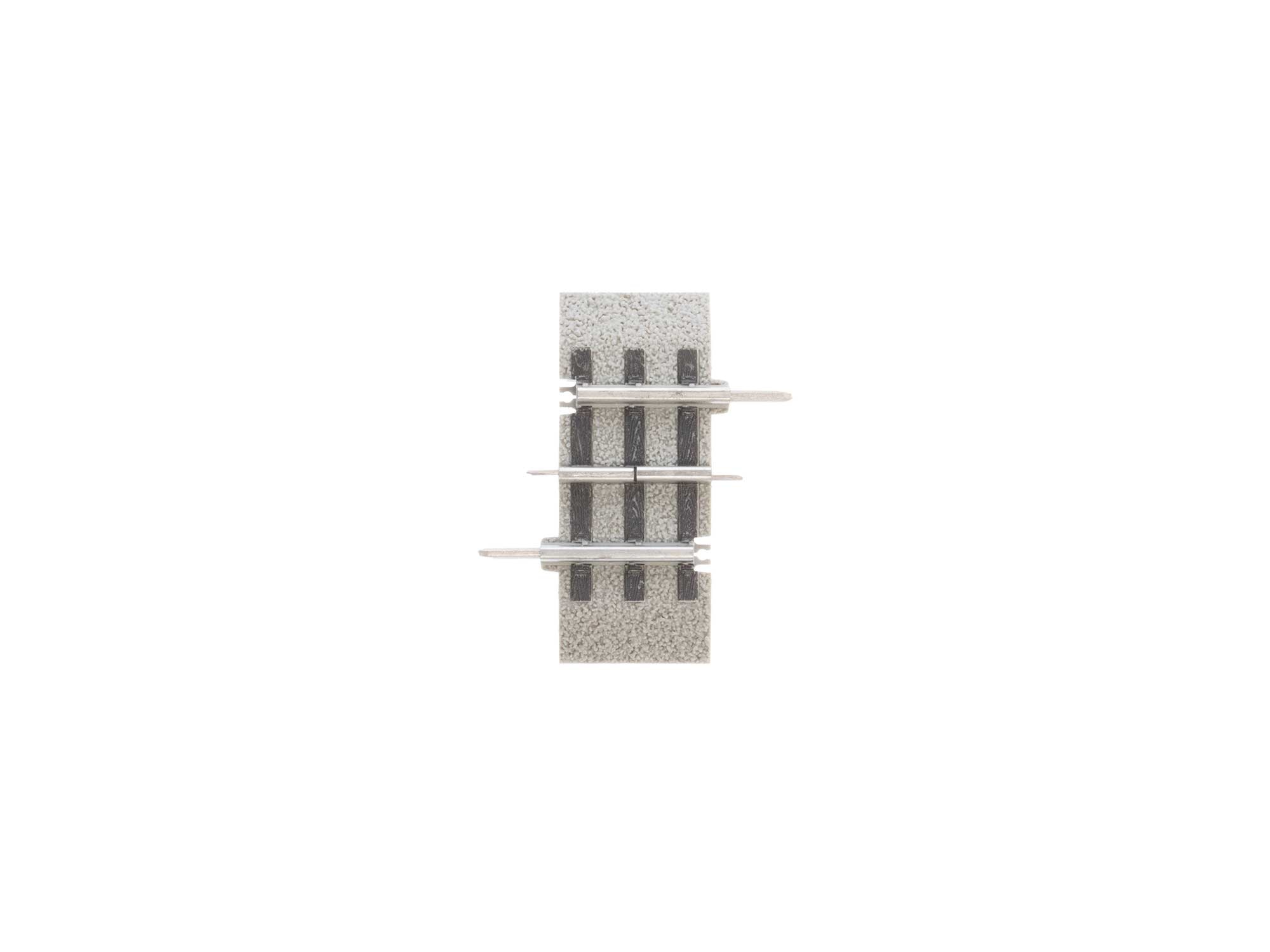
Construction: Integrated black plastic roadbed with three-rail track molded through the top. Roadbed provides realistic ballast appearance and quiet running. Pieces click together with integrated locking connectors.
Curve radii available: O-31, O-36, O-48, O-60, O-72, O-84, O-96, and O-108. Wide selection covers everything from starter layouts to premium scale-detail installations.
Turnout options: Manual and remote (O-31, O-36, O-48, O-60, O-72). Remote turnouts include integrated non-derailing logic.
Command compatibility: Native support for Lionel LEGACY, TMCC, LionChief Bluetooth, and conventional (transformer) operation. Command signal transmits through the outer running rails; the center rail carries power.
Pros: Excellent out-of-box reliability, quiet running, easy assembly and disassembly, industry-standard for Lionel packaged sets, best support for LionChief and LEGACY command control, widest availability at retail and online.
Cons: Very visible roadbed doesn't look realistic to scale modelers, higher price per foot than traditional tinplate track, less flexible layout designs (all pieces sectional), limited compatibility with non-Lionel products historically.
Typical price: $8-$18 per curve, $6-$12 per straight, $40-$95 per turnout.
Best for: Beginners, Christmas layouts, LionChief and LEGACY users, buyers of Lionel packaged sets, layouts where quiet operation and easy modification matter more than scale realism.
Atlas O
Atlas O produces the most scale-realistic O-gauge track available. Brown plastic ties, prototype-accurate rail heights, and no integrated roadbed give Atlas O layouts a genuine model railroad appearance that FasTrack cannot match.
Construction: Traditional three-rail track with brown plastic crosstie strips and stainless steel rail. Available in nickel-silver rail (premium) or steel (economy). No integrated roadbed — you ballast with cork, foam, or traditional model railroad ballast.
Curve radii available: Sectional in O-31, O-36, O-45, O-54, O-72, and flex track (3-foot lengths bendable to any curve).
Turnout options: Manual and remote in No. 4 through No. 7.5 sizes. Atlas O Nos. 5 and 7.5 are the most popular for realistic layouts.
Command compatibility: Full support for LEGACY, TMCC, LionChief, MTH DCS, and conventional operation. Works with any command system, though physical installation of command insulators requires more care than FasTrack.
Pros: Highly realistic appearance approaching two-rail scale track, flex track allows any curve radius, cheaper per foot than FasTrack, supports realistic ballasting, better compatibility with non-Lionel scenery techniques.
Cons: More installation effort (ballasting, sub-roadbed), less forgiving of poor track work than integrated systems, requires more space for the same layout footprint due to prototype rail proportions, less common at retail than FasTrack.
Typical price: $5-$10 per curve, $4-$7 per straight, $55-$110 per turnout.
Best for: Scale-detail modelers, hobbyists prioritizing realism, layouts with hand-built ballast and scenery, freelance short-line and prototype-based operations.
MTH RealTrax and ScaleTrax
MTH offers two track systems. RealTrax is integrated-roadbed sectional (similar concept to FasTrack). ScaleTrax is scale-appearance realistic track (competes with Atlas O).
RealTrax: Black integrated roadbed with sectional pieces in O-31, O-42, O-54, O-72 curves. Simple installation, quiet running. Well-suited for MTH DCS command control. Historically competitive with FasTrack but MTH availability has been constrained.
ScaleTrax: Brown ties, silver rail, no roadbed — very similar visual profile to Atlas O. Available in traditional sectional and flex track. Great appearance, requires ballasting like Atlas.
Command compatibility: Both systems work with LEGACY, TMCC, LionChief, MTH DCS, and conventional operation. MTH DCS integration is particularly clean on RealTrax with MTH-branded turnouts.
Pros: RealTrax offers integrated roadbed convenience with realistic performance, ScaleTrax offers realistic appearance similar to Atlas, both offer good compatibility with all command systems.
Cons: MTH availability has been variable since operational restructuring, may require sourcing from established dealer inventory rather than fresh production, some MTH-specific accessories rare at retail.
Typical price: $7-$16 per curve (RealTrax), $5-$11 per curve (ScaleTrax), turnouts $50-$110 depending on tier.
Best for: MTH DCS users, hobbyists wanting realistic-appearance track without full Atlas O scale profiles, MTH command control enthusiasts.
Gargraves
Gargraves is the oldest continuously-produced O-gauge track brand, dating to 1938. Stainless-steel tinplate track with a distinctive traditional appearance popular with traditional and Standard Gauge modelers.
Construction: Solid stainless steel three-rail track with wooden tie strips. Available in flex track and standard sectional pieces. No integrated roadbed. Extremely durable and popular with modelers who need track that will last decades.
Curve radii available: Flex track allows any curve. Sectional in O-42, O-54, O-72, and wider.
Turnout options: Traditional Gargraves turnouts available in multiple sizes; often paired with Ross Custom Switches (compatible with Gargraves rail) for premium options.
Command compatibility: Full support for LEGACY, TMCC, LionChief, MTH DCS, and conventional operation.
Pros: Extremely durable, wooden tie strips offer traditional tinplate appearance, flex track allows infinite curve variety, compatible with premium Ross Custom Switches, well-established in the traditional hobby community.
Cons: More installation effort than integrated roadbed systems, wooden tie strips can be damaged by moisture in unheated spaces, requires ballasting for realistic appearance, less common at retail than FasTrack or Atlas.
Typical price: $4-$8 per foot of flex track, $50-$120 per turnout (Gargraves), premium Ross switches $200-$400+.
Best for: Traditional tinplate modelers, Standard Gauge modelers, large layouts with mixed-scale operation, hobbyists prioritizing track durability and flex track versatility.
Head-to-Head: Reliability
All four systems are reliable when properly installed. FasTrack has the highest out-of-box reliability because its integrated roadbed system minimizes installation errors. Atlas O and ScaleTrax require more careful installation but perform equally well once properly installed. Gargraves is legendarily durable but demands careful ballasting and sub-roadbed for smooth operation.
Head-to-Head: Visual Realism
Ranking from most to least realistic: Atlas O and MTH ScaleTrax tie for most realistic appearance (both have scale-appearance ties and rails). Gargraves comes next with its traditional tinplate look. FasTrack and MTH RealTrax rank lowest due to integrated black plastic roadbed that reads as toy rather than model.
Head-to-Head: Cost Per Foot
From cheapest to most expensive per running foot: Atlas O flex track ($1.50-$2.00 per foot), Gargraves flex track ($4-$5 per foot), MTH ScaleTrax ($5-$7 per foot), MTH RealTrax ($8-$10 per foot), Lionel FasTrack ($10-$15 per foot). Note that turnout pricing follows a similar pattern with Atlas O generally cheapest and Lionel FasTrack most expensive.
Head-to-Head: Command Control Support
All four systems support LEGACY, TMCC, LionChief Bluetooth, MTH DCS, and conventional operation equally well when properly installed. FasTrack has the smoothest integration for Lionel command control (no separate insulators required), while Atlas and Gargraves require adding insulated joiners for block signaling and command control. MTH RealTrax integrates cleanest with MTH DCS.
How to Choose Your Track System
The right choice depends on your specific priorities:
Choose FasTrack if: You are building a first layout, prioritize easy assembly and disassembly, want the quietest operation, plan to use LionChief or LEGACY command control heavily, or are building around a Lionel starter set.
Choose Atlas O if: You prioritize realistic appearance, want to hand-ballast for maximum realism, are on a tighter budget for a large layout, or want the flexibility of flex track for organic curve designs.
Choose MTH RealTrax if: You are heavily invested in MTH DCS command control and want integrated roadbed convenience with MTH ecosystem support.
Choose MTH ScaleTrax if: You want Atlas-style realism but prefer sourcing from the MTH ecosystem for command control integration.
Choose Gargraves if: You are building a very large layout, want maximum durability, are a traditional tinplate modeler, or want compatibility with premium Ross Custom Switches.
Mixing Track Systems
Can you mix track systems? Technically yes, with careful attention to rail height matching and joiner compatibility. FasTrack and Atlas O don't share rail heights and require transition pieces. Gargraves works with Ross Custom Switches (same rail height). Most hobbyists find mixing systems more trouble than it's worth — pick one system and commit to it.
Frequently Asked Questions
Which O-gauge track system is best for beginners?
Lionel FasTrack is the standard beginner recommendation. Integrated roadbed, easy click-together assembly, quiet operation, widest retail availability, and native LionChief command support make FasTrack the lowest-friction starting point. Nearly every Lionel packaged set includes FasTrack.
Is Atlas O worth the extra installation effort?
For scale-focused modelers, yes. Atlas O's realistic appearance makes finished layouts look genuinely like model railroads rather than toy trains. The extra installation work (ballasting, sub-roadbed) pays off in visual quality that FasTrack cannot match. For casual or occasional-use layouts, FasTrack's convenience often wins.
Can I run Lionel LEGACY on Atlas O track?
Yes. LEGACY command signals work through any three-rail track with proper installation. Atlas O, Gargraves, and MTH ScaleTrax all support LEGACY equally well as FasTrack. The command signal transmits through the outer rails on any three-rail system.
What is the minimum radius I need for my track?
Curve radius depends on locomotive size. Small steam and diesel run reliably on O-31. Medium locomotives (Berkshires, Hudsons, F-units) prefer O-42 or wider. Large modern steam (Big Boy, Challenger, Allegheny) requires O-72 minimum, ideally O-84+. For the full guide, see our O-gauge curve radius guide.
How much track do I need for a typical layout?
A 4x8 starter layout needs approximately 30-40 feet of track. A 4x12 layout needs 50-70 feet. A 5x10 with two loops needs 80-100 feet. Larger layouts (8x12+) with multiple loops and yards can easily reach 150-250+ feet.
Verdict
There is no single best O-gauge track system — the right choice depends on what you are building and why. FasTrack is the beginner-friendly choice with maximum retail support and best out-of-box reliability. Atlas O is the scale-realism choice for hobbyists prioritizing appearance. MTH RealTrax and ScaleTrax are strong options for MTH DCS users. Gargraves is the traditional tinplate choice for durability and premium turnout compatibility. Match the track to your priorities and stick with one system — that consistency will pay off in reliability and easy expansion over time. For related layout guidance, see our curve radius guide, our FasTrack layout designs guide, and our block wiring guide to plan your layout end-to-end.
Newsletter
Weekly O-gauge tips & reviews
New reviews, layout ideas, and hobby news — straight to your inbox.