O-Gauge Layout Ideas: 15 Photo Inspirations for Your Next Model Railroad Build
July 3, 2026
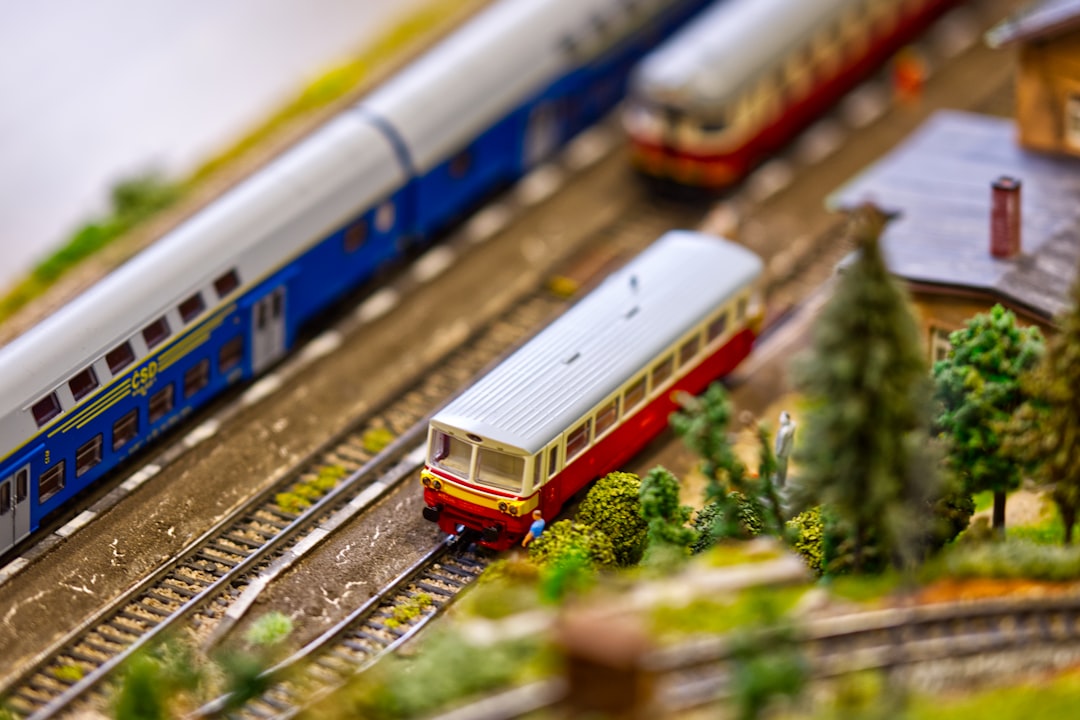
Looking for O-gauge layout ideas that will actually inspire your next build? Whether you're planning a starter 4x8, considering a basement expansion, or just want visual reference for what serious O-gauge modeling looks like, this vibetrains.com photo tour walks through 15 layout ideas across every scale, era, and style. Real photos, real modeling, real inspiration.
Some of these you can build immediately with a starter set and a weekend. Others represent years of scenery work and thousands of hours of operating time. All of them are legitimate expressions of what O-gauge model railroading can be in 2026.
1. The Classic Diesel Mainline
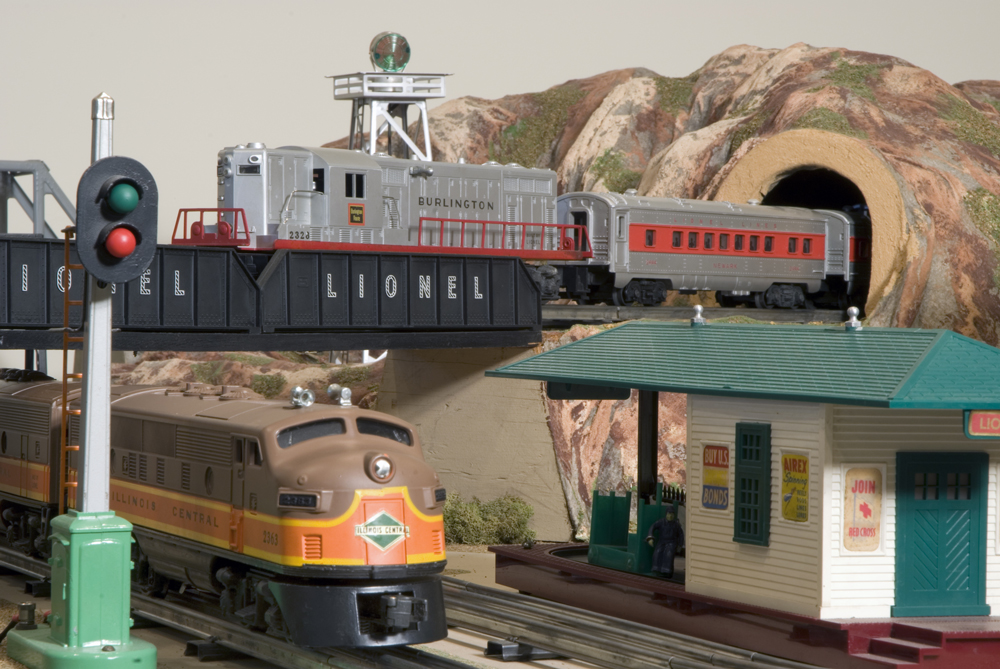
A mature diesel-era mainline running through developed scenery is the reference standard for well-established O-gauge layouts. Multiple diesels running simultaneously on a double-track main, era-appropriate freight consists, and scenery that's been worked and re-worked for years. This is what a home layout can become with sustained commitment — not a weekend project but a decade of work that pays off in genuinely immersive railroading.
The photo above shows what a well-developed classic diesel layout looks like. Notice the density of scenery, the visual layering of foreground detail and background terrain, and how the trains are the focal point but not the entire visual field. That balance is what separates a display layout from a place trains actually inhabit.
2. Big Steam on Wide Curves
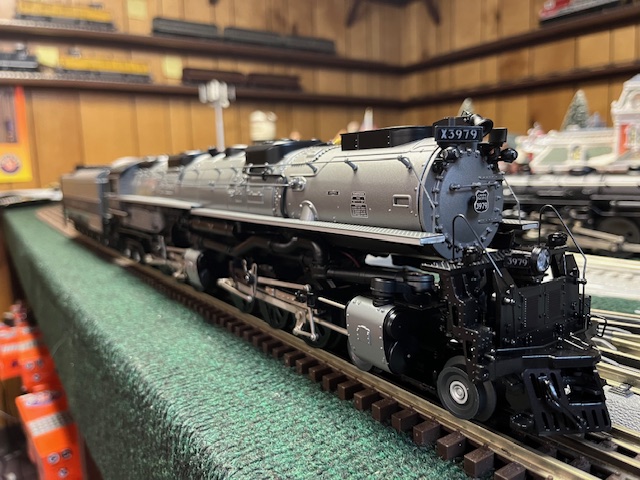
For hobbyists with the space and budget to run articulated steam, few layout concepts match the visual impact of a Big Boy or Challenger on the head of a scale-length freight train. The Union Pacific Big Boy 4-8-8-4 was the largest production steam locomotive ever built, and Lionel's Vision Line reproduction captures every detail of the prototype.
Layout requirements for this look: O-72 minimum curves (O-84 or O-96 preferred), long tangent (straight) sections that let the full consist show off, and scenery scaled up to feel proportional to the equipment. Small mountains and tight curves make a Big Boy look out of place. Massive scenery and generous curves make it look right.
3. The Bridge and Trestle Scene
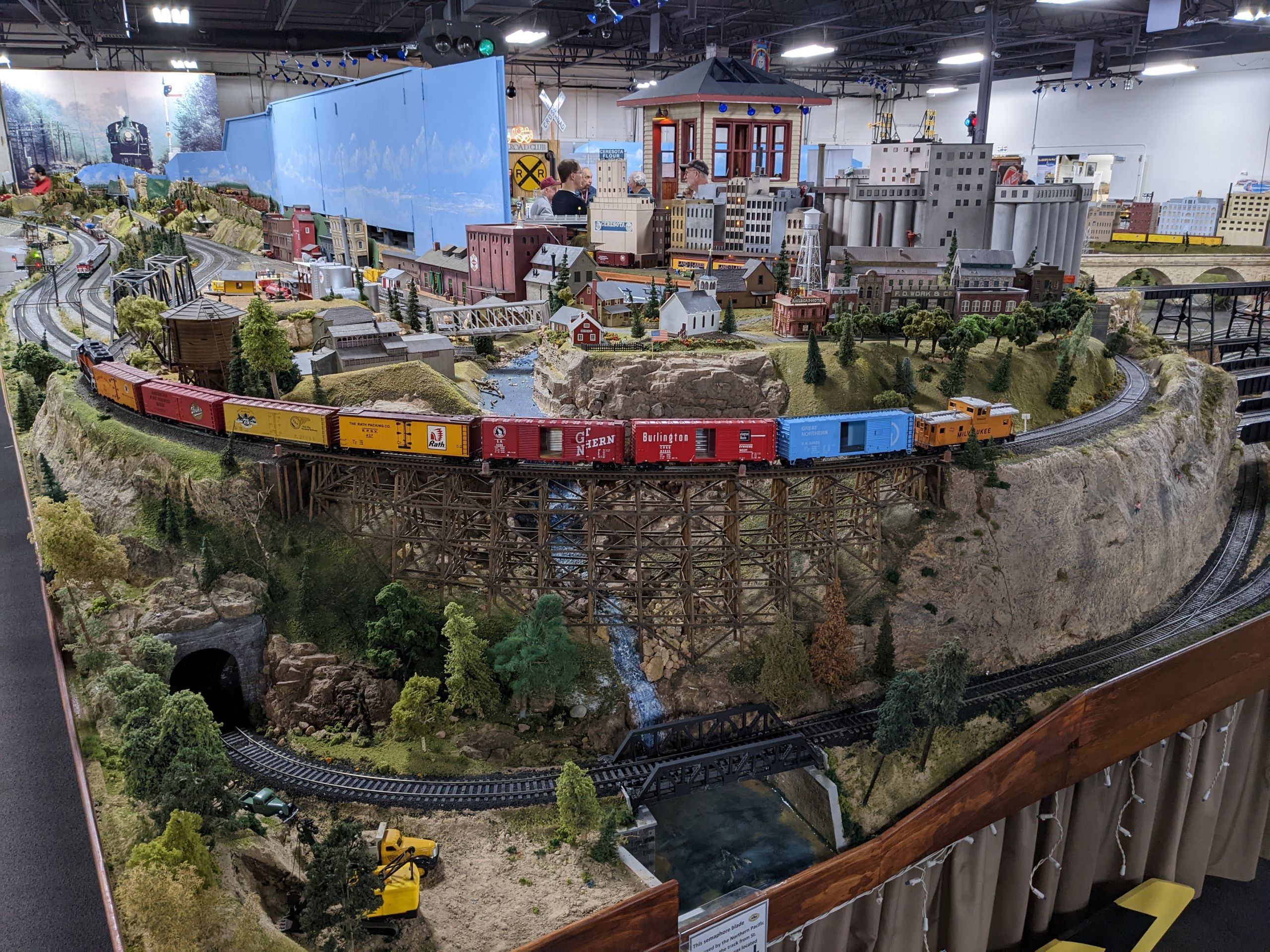
Nothing transforms an O-gauge layout faster than a well-placed bridge or trestle over a scenic gap. The vertical interest, the photo opportunities, and the operational drama of a train crossing high above the surrounding terrain make bridges among the highest-return scenery investments you can make.
For a full guide to bridge options across every price and style, see our best O-gauge bridges and trestles guide. For the trestle above specifically, the design combines a Woodland Scenics trestle set with custom-carved rock terrain — a $100 accessory investment that anchors the visual composition of an entire section.
4. Winter and Christmas Layout Scenes
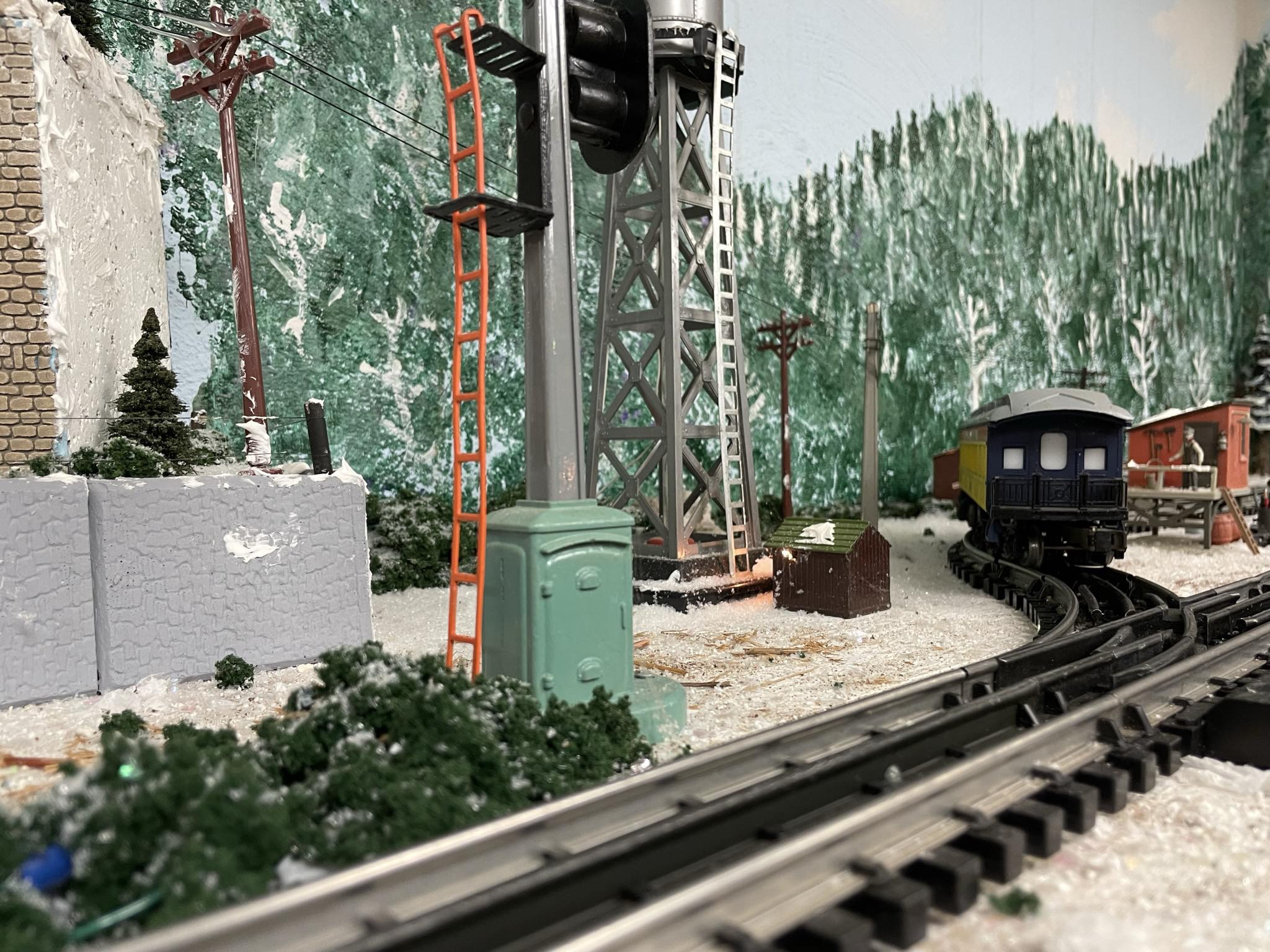
The winter or holiday-themed layout takes the around-the-tree tradition and scales it to a full miniature world. Snow-covered scenery (achievable with baking soda, plaster, or dedicated Woodland Scenics snow products), festive structures, and holiday-themed rolling stock combine to produce layouts that photograph beautifully year-round.
These layouts particularly reward interior lighting — warm-white LEDs in structures create the magical night-scene effect that's the signature look of holiday layouts. For lighting-specific guidance, see our building lights guide. For Christmas set picks, see our best Christmas train sets guide.
5. The Freight Yard and Operations Focus
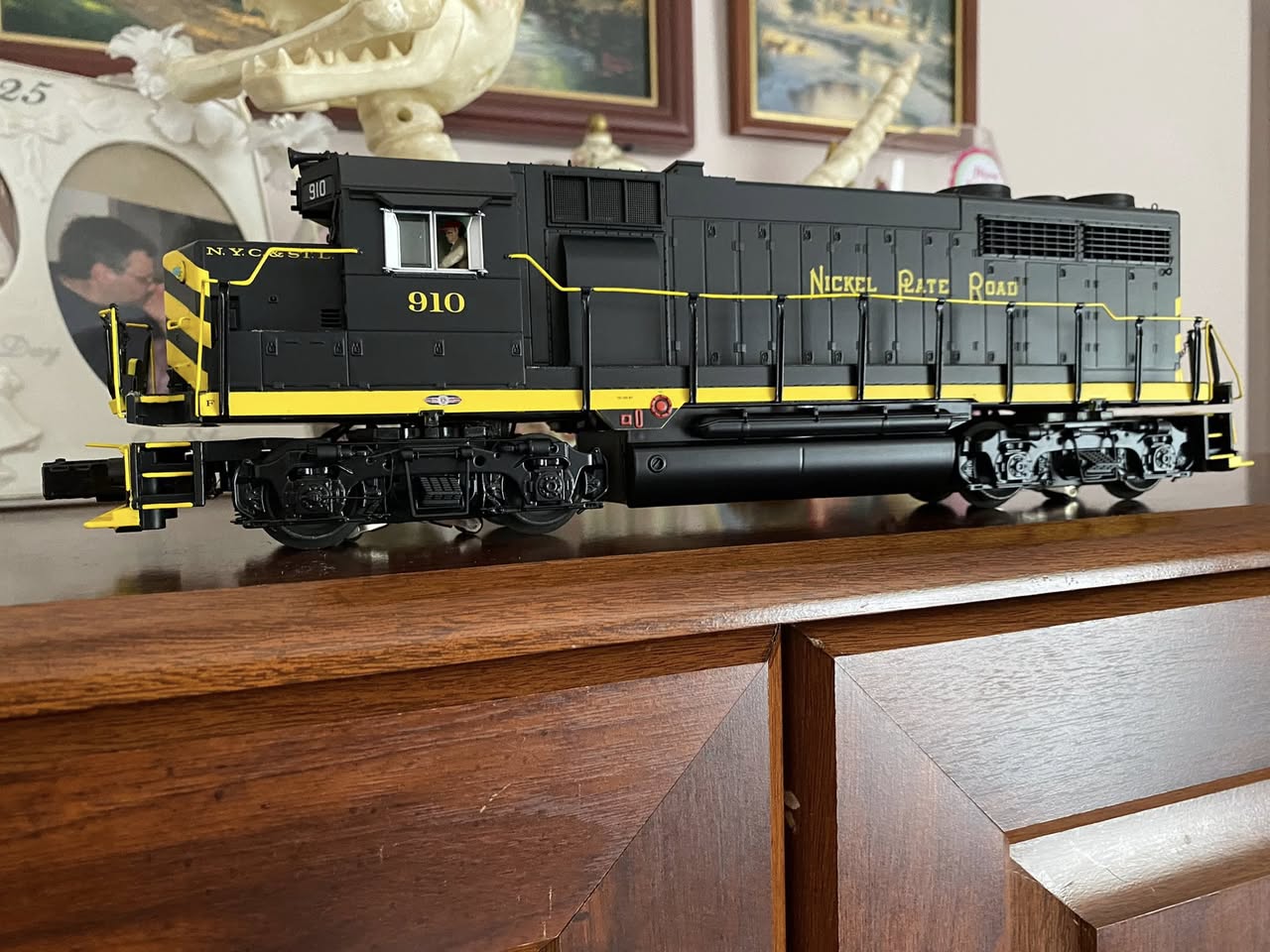
For hobbyists whose interest is more about running trains than watching them circle, an operations-focused layout centered on a working freight yard delivers years of engagement. A well-designed yard supports classifying incoming freight, building outbound consists, servicing locomotives, and interchange with connecting railroads or industries.
Yard-focused layouts work well in smaller footprints because the operations are dense — a 4x8 layout can support meaningful switching if the track plan is designed around a yard rather than a mainline loop. The visual doesn't need to be dramatic; the operational depth is the reward.
6. The Club-Style Basement Layout
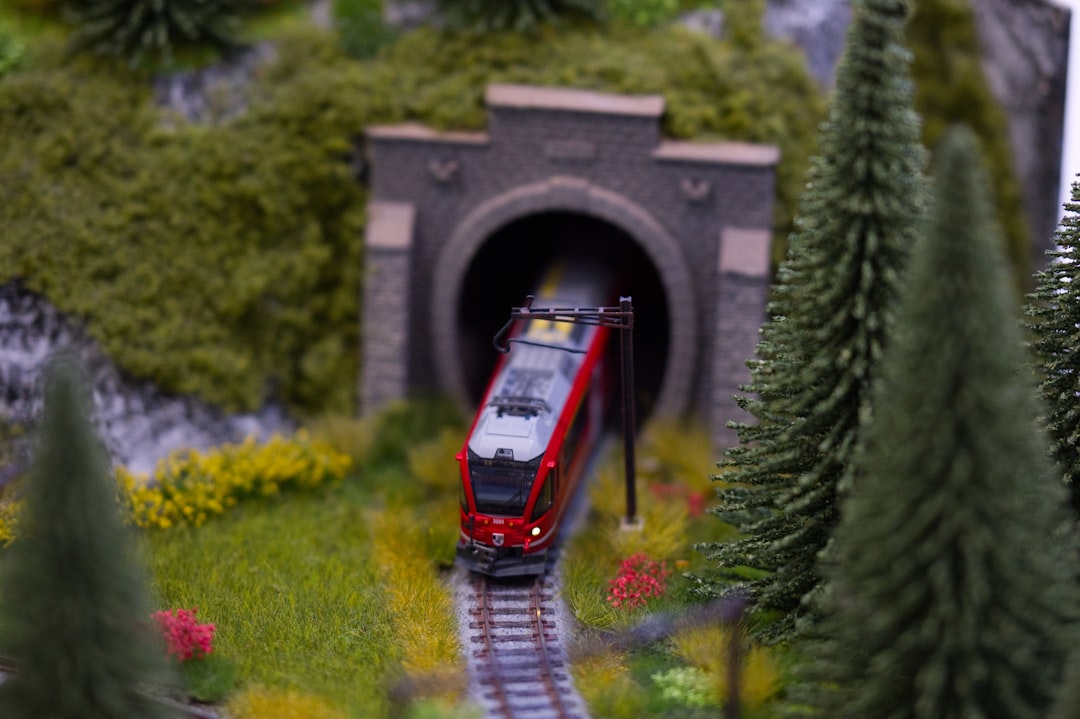
The full basement layout represents the destination many serious O-gauge hobbyists aim for — a room-filling multi-loop railroad with extensive scenery, operational depth, and years of ongoing development work. These layouts typically start with careful planning (see our layout planning software guide), evolve through several major expansions, and continue improving indefinitely.
Key elements of successful basement layouts: adequate lighting (dedicated overhead fixtures, not just room lighting), climate control (60-75°F, 30-50% humidity), thoughtful benchwork (see our train table DIY guide), and a track plan designed for both continuous running and switching operation.
7. The Vintage-Themed Layout
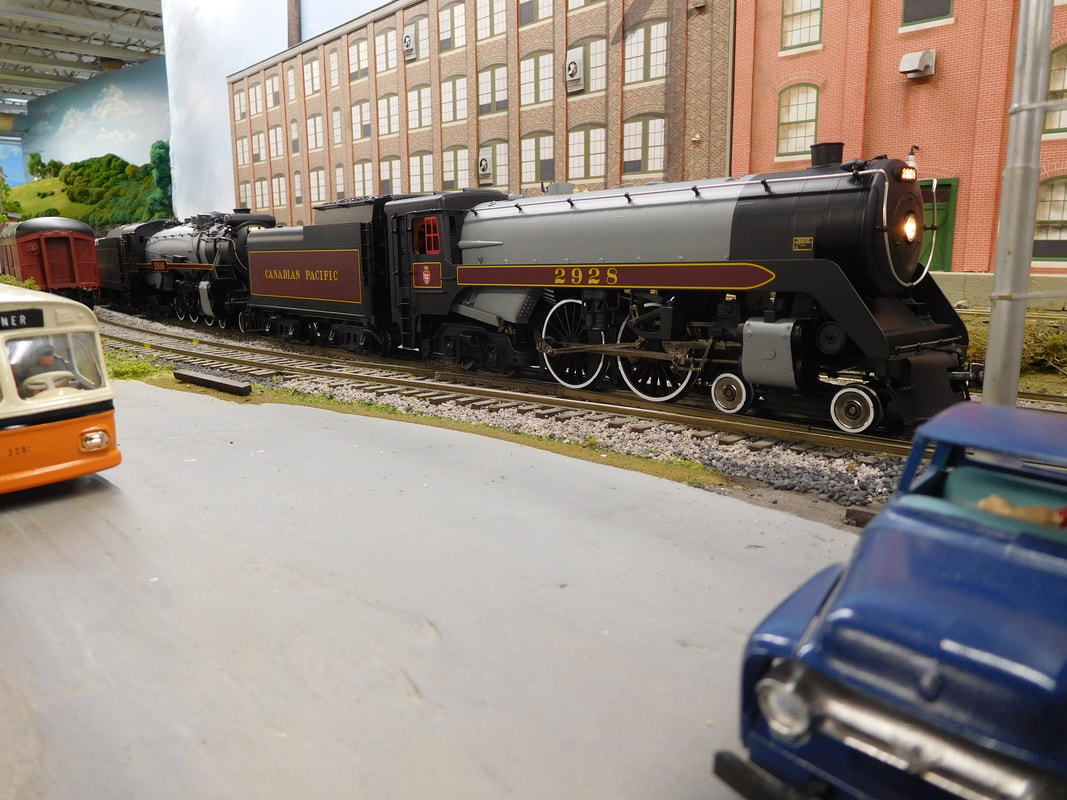
For collectors of postwar Lionel, a vintage-themed layout that showcases the tinplate aesthetic delivers a different kind of satisfaction than modern scale layouts. Postwar steam locomotives, classic operating accessories, era-appropriate structures, and 1950s-era paint schemes combine to create a working miniature version of the American railroad golden age.
These layouts typically use traditional Lionel tubular track or FasTrack (see our FasTrack vs Atlas O comparison), incorporate iconic postwar Lionel operating accessories (see our operating accessories guide), and celebrate the postwar Lionel design philosophy discussed in our tinplate vs scale guide.
8. The Track Planning Foundation
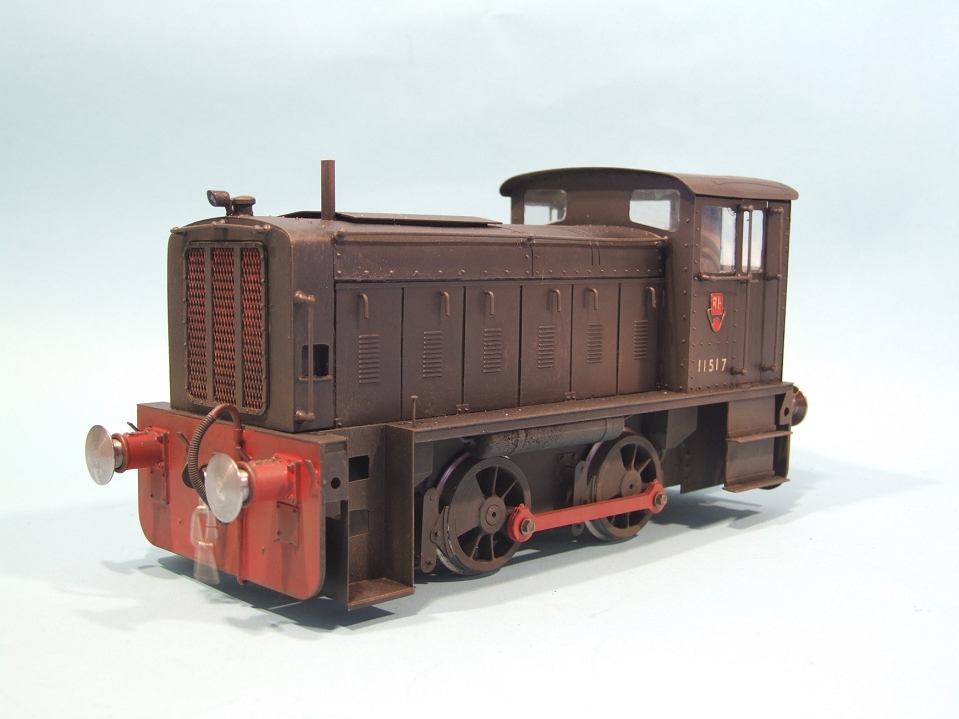
Every good O-gauge layout starts with a solid track plan. Modern Lionel FasTrack has integrated roadbed that produces a clean finished look immediately, snap-together connections that speed assembly, and curve options from O-31 through O-84 that accommodate any equipment. For layout planning starting from FasTrack, our 4x8 layout planning guide covers the design foundations most starter layouts need.
9. The Figure-Eight Layout
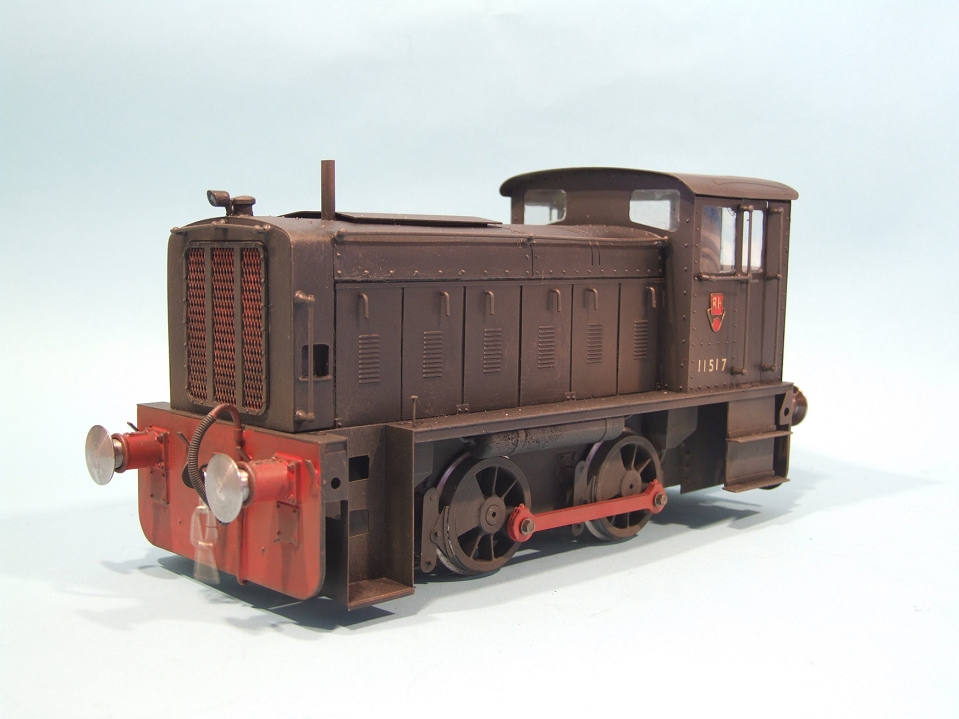
The figure-eight layout uses a crossing pattern to fit more mainline running into a small footprint. Two loops that cross in the middle allow you to run trains in patterns that a simple oval can't match, and the crossing itself creates operational interest.
Figure-eight designs work particularly well in constrained spaces — a 4x8 tabletop can support a full figure-eight with a passing siding and enough scenery space to feel developed. For hobbyists who want more operational variety than a single loop but don't have basement space, figure-eight is the answer.
10. The Grade Crossing Focal Point
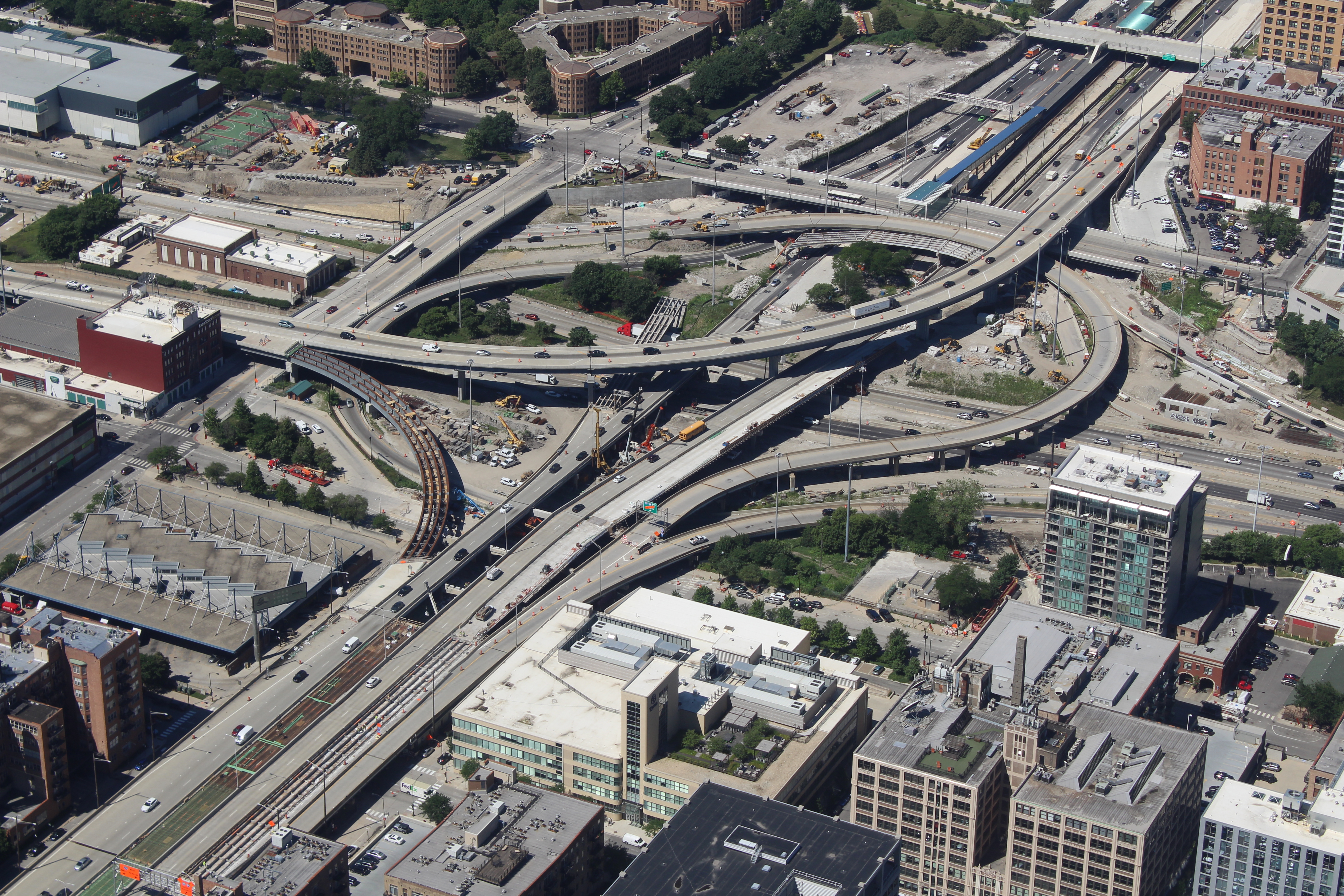
A grade crossing with working signals and flashing lights is one of the highest-impact operating accessories you can add to a layout. The crossing itself creates a natural visual focal point, and the automated signal operation as trains approach creates operational drama.
Most modern Lionel grade crossings use magnetic or optical detection to activate the crossing gates and flashing lights automatically as trains pass. Installation is straightforward — the crossing accessory connects to your track power and to a separate accessory transformer for the lights.
11. Lit Night-Running Scenes
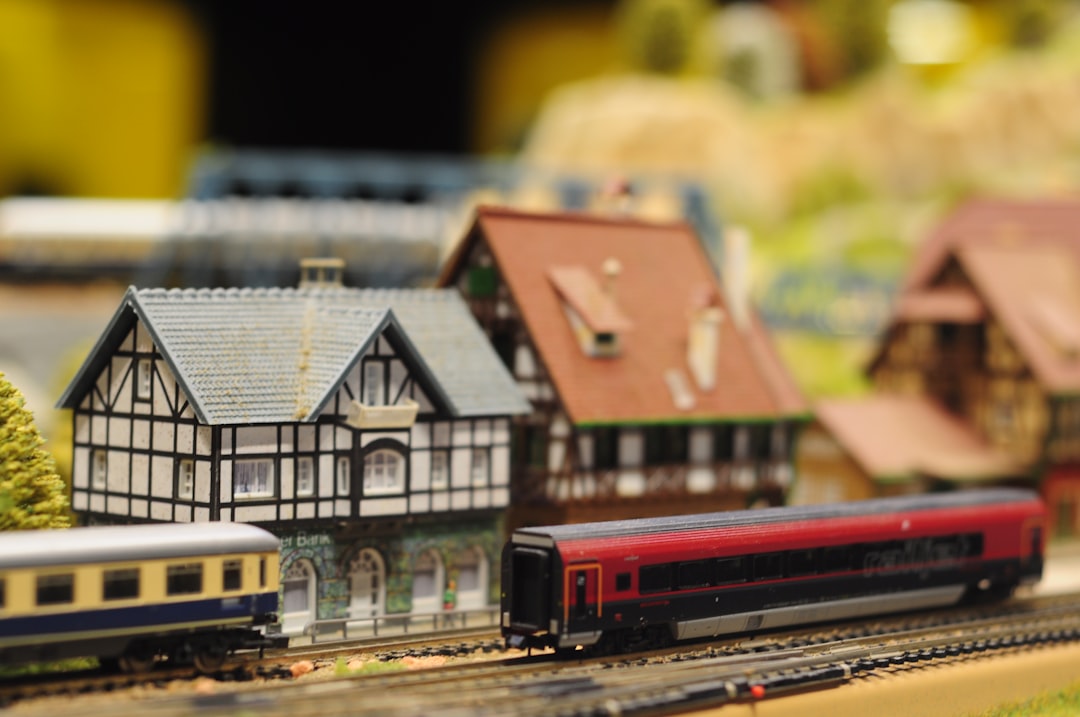
Layouts designed for night-running lighting deliver a completely different aesthetic experience than daytime operation. Warm-white LED lighting in structures, working street lamps, lit passenger car interiors, and dim overall room lighting combine to produce scenes that photograph like film sets.
For hobbyists who enjoy operating sessions after dark, investing in the lighting infrastructure early pays enormous returns. LEDs are inexpensive, dedicated accessory transformers keep lighting separate from track power, and the difference between a well-lit night scene and a day-lit layout is dramatic.
12. The Shop Display Layout
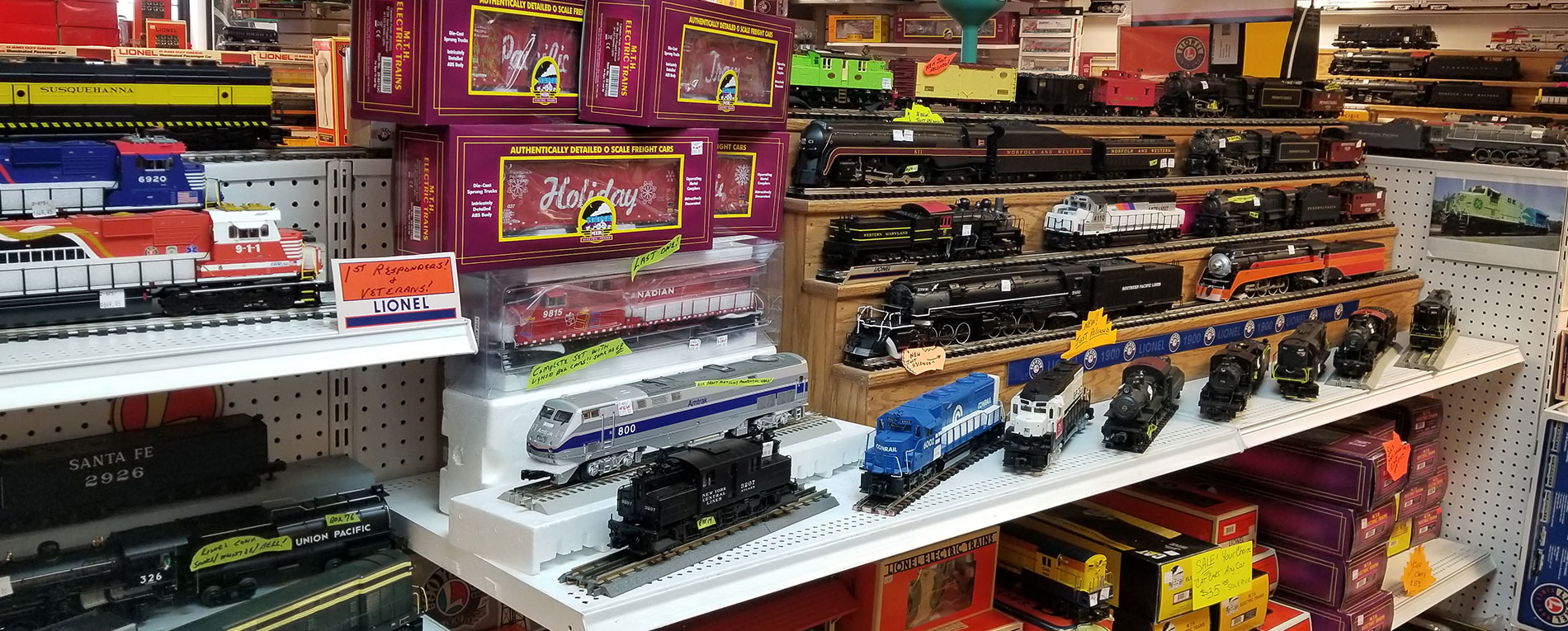
Not every layout needs to run trains. For pure collectors, a shelf display layout that showcases prized locomotives, rolling stock, and accessories in a curated arrangement delivers years of enjoyment without any operational commitment.
Display-only layouts can be simpler benchwork (no wiring needed), incorporate track for visual anchor without running trains on it, and focus entirely on the visual composition of the collection. Some collectors combine — an operational main layout for running plus a separate display shelf for the pieces that never leave their boxes.
13. Regional Themed Layouts
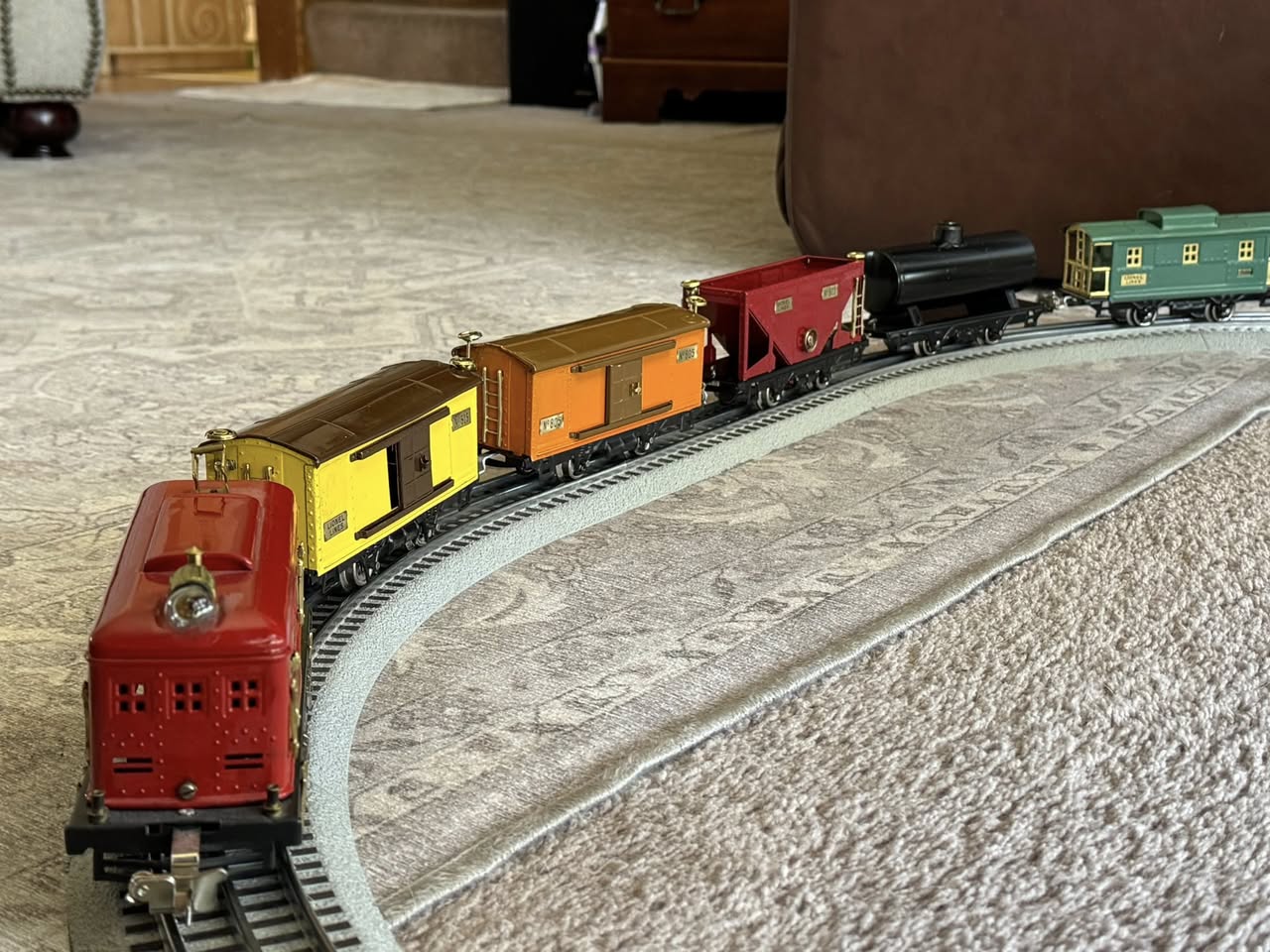
Layouts themed around specific regional railroads or historical operations deliver depth that generic layouts miss. Modeling the Nickel Plate Road, Pennsylvania Railroad, Union Pacific, Santa Fe, or any other prototype-specific theme means selecting era-appropriate equipment, researching real operations, and building scenery that reflects the actual geography and industries served by that railroad.
For collectors, regional themes justify buying specific road-name variations that don't fit generic layouts. For operators, historical prototypes provide realistic operating patterns to simulate. The added constraint of prototype fidelity often makes layout design decisions easier, not harder.
14. Front-View Prototype Photography
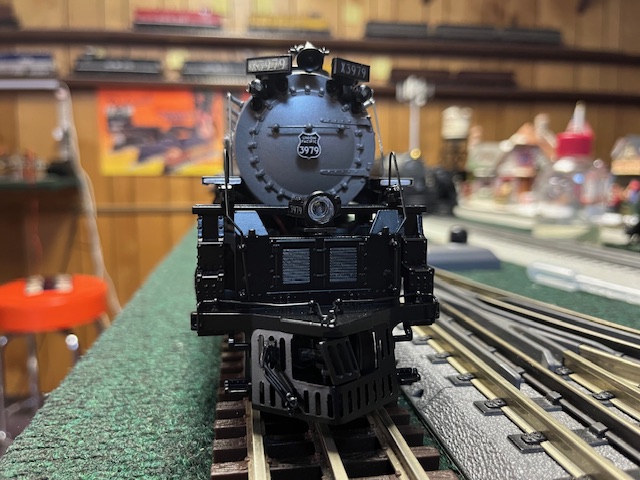
The way you display your layout in photographs shapes how the rest of the community perceives it. Head-on and low-angle shots that emphasize the locomotive's presence make even modest equipment look impressive. Wide overhead shots that show the full layout scope emphasize the room-filling ambition of larger builds.
For hobbyists who share their layouts on Instagram, YouTube, or in the online forums, developing basic photography skills is worth the time. Natural window light, phone camera in portrait mode with edited exposure, and simple compositional rules turn casual layout snapshots into images that get shared and drive engagement with the hobby.
15. The Long-Term Development Layout

Every serious layout eventually becomes a long-term development project rather than a finished piece. New scenery sections get added. Track plans evolve. Old sections get torn out and rebuilt with new techniques the modeler has learned. Buildings are replaced with better versions. Lighting gets upgraded. The layout becomes as much a documentation of the modeler's development as a static representation of a railroad.
This is the destination worth aiming for — not a finished layout, but a continuously improving one that reflects sustained engagement with the hobby over years or decades. For guidance on building the foundation your long-term development will sit on, see our ultimate vibe train room setup guide.
Choosing Your Direction
The layouts above span multiple styles because there's no single correct approach to O-gauge modeling. Some hobbyists build for operational depth. Others build for visual composition. Some collect and display. Others run trains for hours weekly. Some model specific historical prototypes. Others create fictional railroads that suit their aesthetic preferences.
Pick what genuinely appeals to you rather than what other people are building. The layout that reflects your specific interests will hold your engagement for years; the layout you build because it seems impressive gets abandoned in a year or two.
Getting Started From Any of These
If any of the layouts above resonate, the practical starting point is the same: get a starter set (see our 2026 starter set guide), run it for a few months on a temporary loop to develop your feel for the hobby, then commit to permanent benchwork (see our train table DIY guide) and build gradually.
Your first permanent layout will probably not be the layout you eventually settle on. That's fine. First layouts teach you what you actually enjoy about the hobby, and second layouts reflect that self-knowledge. Start where you are, learn as you build, and adjust as your interests develop.
Frequently Asked Questions
What's the best O-gauge layout for beginners? A simple 4x8 layout with a starter set is the standard beginner approach. It's affordable, teaches essential skills, and delivers immediate satisfaction. For plans, see our 4x8 layout planning guide.
How much does it cost to build a good O-gauge layout? A quality first 4x8 layout with scenery costs $500-$1,000 total. Basement-filling layouts range from $3,000-$15,000+ depending on scenery ambition, structures, and locomotive collection. For pricing details, see our O-gauge pricing guide.
What space do I need for a good O-gauge layout? A meaningful layout starts at 4x8 feet. Better operational variety needs 6x10 or 8x12. Serious basement-filling layouts start around 10x16 and go up from there.
How long does it take to build a good O-gauge layout? A basic 4x8 with simple scenery takes 40-80 hours. Well-developed home layouts take hundreds of hours over months or years. Basement-filling layouts typically represent thousands of hours over multiple years.
Can I combine multiple layout ideas from this list? Yes. Most successful home layouts combine elements — a mainline loop with a small yard, some bridges over scenic terrain, and dedicated lighting for night operation. Pick the elements that appeal to you and integrate them.
Final Word
O-gauge layout ideas are as varied as the hobbyists who build them. The 15 layouts above show what's possible when you commit to a direction and follow it through. Whatever style resonates most, the path forward is the same: start small, learn as you build, and let your layout evolve as your understanding of what you actually enjoy grows over time.
Newsletter
Weekly O-gauge tips & reviews
New reviews, layout ideas, and hobby news — straight to your inbox.