How to Model a Small Town on Your O-Gauge Layout: Photo Guide to Realistic Miniature Cities
July 8, 2026
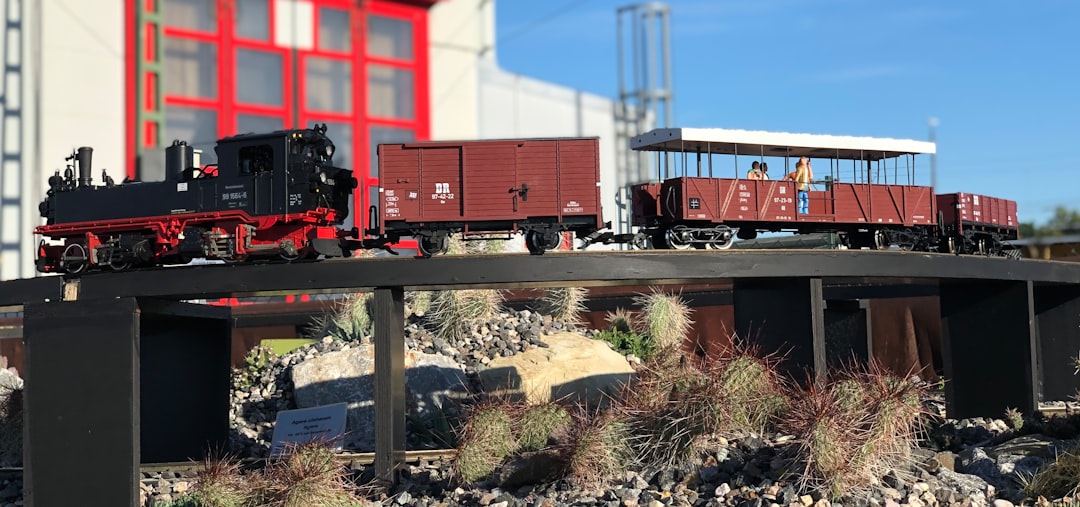
A small town gives your O-gauge layout somewhere to be. Without a town, your railroad has no destination — trains just circle. With a well-modeled small town, every train movement has purpose: freight arriving at businesses, passengers boarding at the station, mail deliveries at the post office. The town transforms a track loop into a working miniature world.
This vibetrains.com photo guide walks through modeling a convincing small town on an O-gauge layout — the buildings you need, how to arrange them, streets and sidewalks, lighting, and the small details that separate an obviously-modeled town from one that reads as a real place.
Why a Small Town Matters
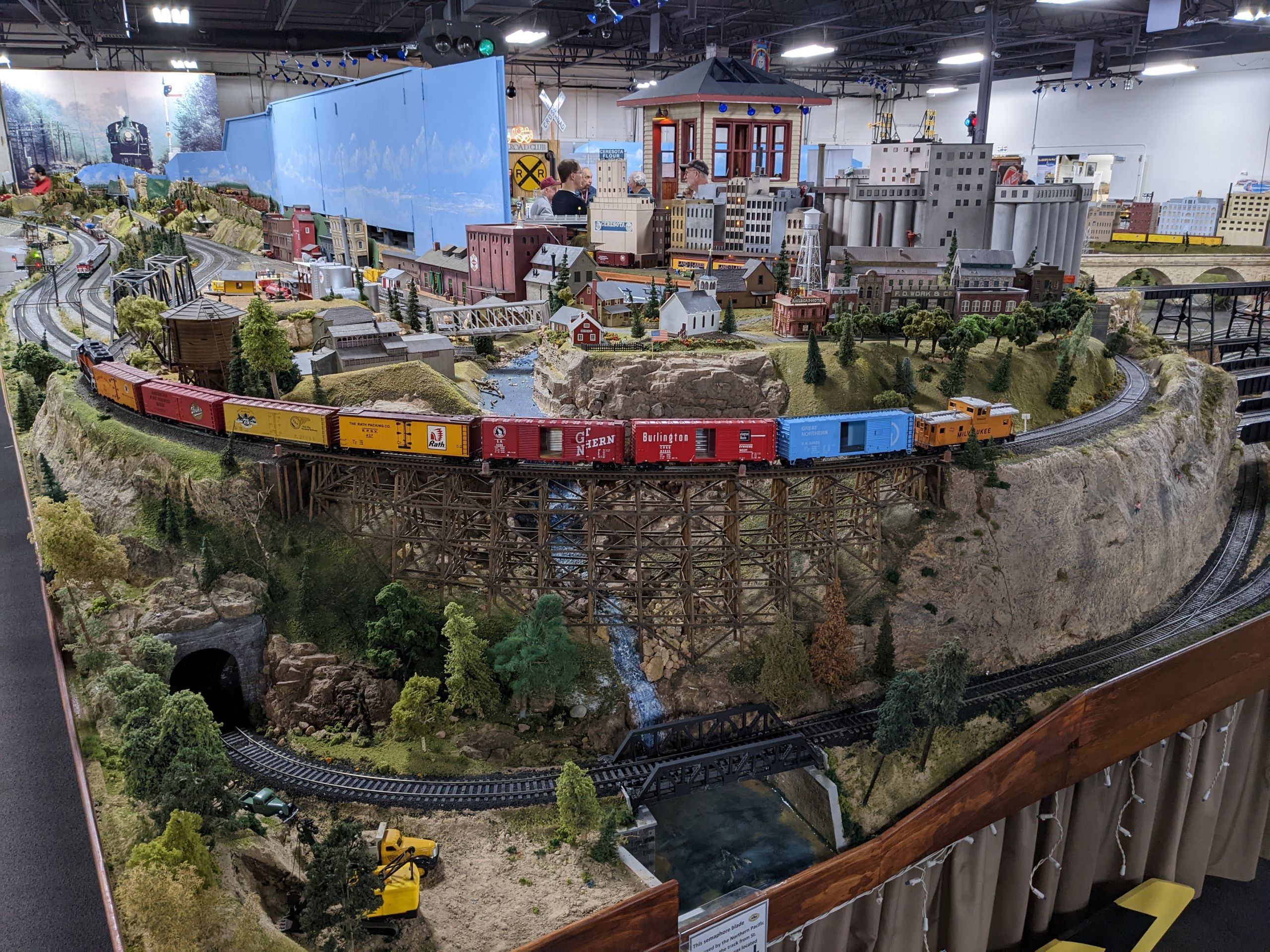
Watch a real small town and you'll notice that everything about it exists in relation to the railroad. The station is at the center of downtown. The main street runs parallel to the tracks or perpendicular to them. Warehouses back up to sidings for freight service. Water towers, coal chutes, and grain elevators serve the industries the railroad was built to support.
A layout with an accurate small-town scene captures this relationship. The railroad has a reason to exist, and every scene tells part of the town's story. For hobbyists building around a specific era or prototype, the town is where the modeled world comes alive.
Essential Buildings for a Small Town
Every convincing small town includes certain building types. Start with these essentials:
Railroad station: The passenger station is often the town's original reason for being. Position it prominently, ideally in the center of the town section of the layout. Multiple sizes are available depending on your town's size — small country station, medium-size interlocking tower with attached station, larger urban depot.
Post office: The post office was a small-town social center. Historic post office buildings often had prominent architecture — brick or stone construction, columns, formal entrance. Lionel and other manufacturers make appropriate models.
Bank: The town bank was typically the sturdiest building, built to convey stability and permanence. Stone or brick construction with formal architecture.
Church: Nearly every small town had at least one prominent church, often with a steeple visible from a distance. A steeple visible in your layout skyline adds vertical interest and instant "town" recognition.
Storefronts: The main street was lined with storefronts — general store, hardware store, drugstore, restaurant, barbershop. Multiple storefronts side by side create the downtown look.
Houses: Residential buildings behind the main street. Different sizes and styles suggest a real neighborhood rather than a Monopoly board of identical buildings.
Industrial Structures Around the Railroad
Small-town railroads existed to serve the town's industries. Include structures that create real reasons for freight service:
Warehouse or freight house: The freight house at the station handled less-than-carload freight. Small warehouses along a spur track suggest goods coming in and out of businesses.
Grain elevator (for agricultural towns): The tall grain elevator is the signature building of any Midwest small town. Elevators justify covered hopper cars on your layout.
Feed and seed store: Handling agricultural supplies for the surrounding farmland.
Coal dealer: Homes and businesses heated with coal that came in by rail. A coal chute or coal yard beside the tracks is authentic to any pre-1960s town.
Small factory: The lumber mill, canning factory, or small manufacturer that provided local jobs and generated freight traffic.
Water tower and coaling station: If your era predates diesels, the water tower and coaling station for steam locomotive servicing add authenticity.
Streets, Sidewalks, and Automobile Detail
The infrastructure between buildings makes a town feel real. Streets should be appropriate to the era — gravel or macadam for early-1900s towns, asphalt for post-1930s. Sidewalks separate pedestrian areas from vehicle traffic. Curbs and gutters detail the street edges.
Add period-appropriate vehicles: horse-drawn wagons for very early eras, Ford Model A and similar cars for 1930s scenes, mid-century sedans and station wagons for 1950s-1960s scenes, modern vehicles for contemporary layouts. Match your automobile era to your locomotive era.
People make a town feel inhabited. Woodland Scenics and other manufacturers produce O-scale figures in appropriate era-specific clothing. A few well-placed figures (people entering the station, kids in front of the general store, a dog on the sidewalk) do more for realism than dozens of scattered figures.
Lighting Your Town
Small town scenes benefit enormously from lighting. Warm-white LED lighting in the station, storefronts, and the church creates the night-time atmosphere that showcases the layout's best. Street lamps between buildings add pools of light on the streets. Lit signs above storefronts add commercial atmosphere.
The transformation from unlit to lit is dramatic — a small town during daytime layout viewing is nice; the same town lit at night with structures glowing and street lamps casting patterns is memorable. For lighting technique, see our building lights guide.
Layout and Composition
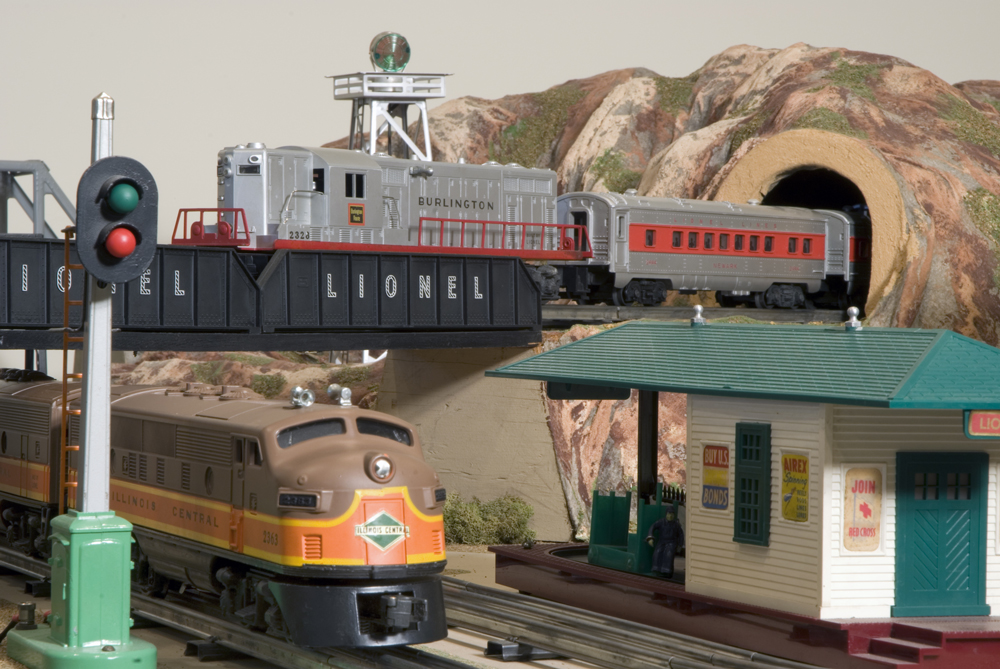
Where you position the town on your layout matters. Follow a few compositional principles:
Position the town along the front edge or accessible face of the layout. Towns invite close inspection. Buried in the middle of a hard-to-see section, town detail is wasted.
Anchor the town to the railroad. Station should be along the mainline. Warehouses backed against sidings. The visual relationship between town and railroad should be obvious.
Face buildings toward the viewer. Photograph and visual angles matter. Turn storefronts to face out; put building backs against the layout background.
Vary building heights. A row of identical-height buildings looks like a monoculture. Mix single-story storefronts with two-story shops with the taller bank and church for a natural skyline.
Leave breathing room. Even a crowded downtown isn't packed. Alleys between buildings, a small park, a parking lot — these negative spaces give the town proportion.
Era-Specific Details
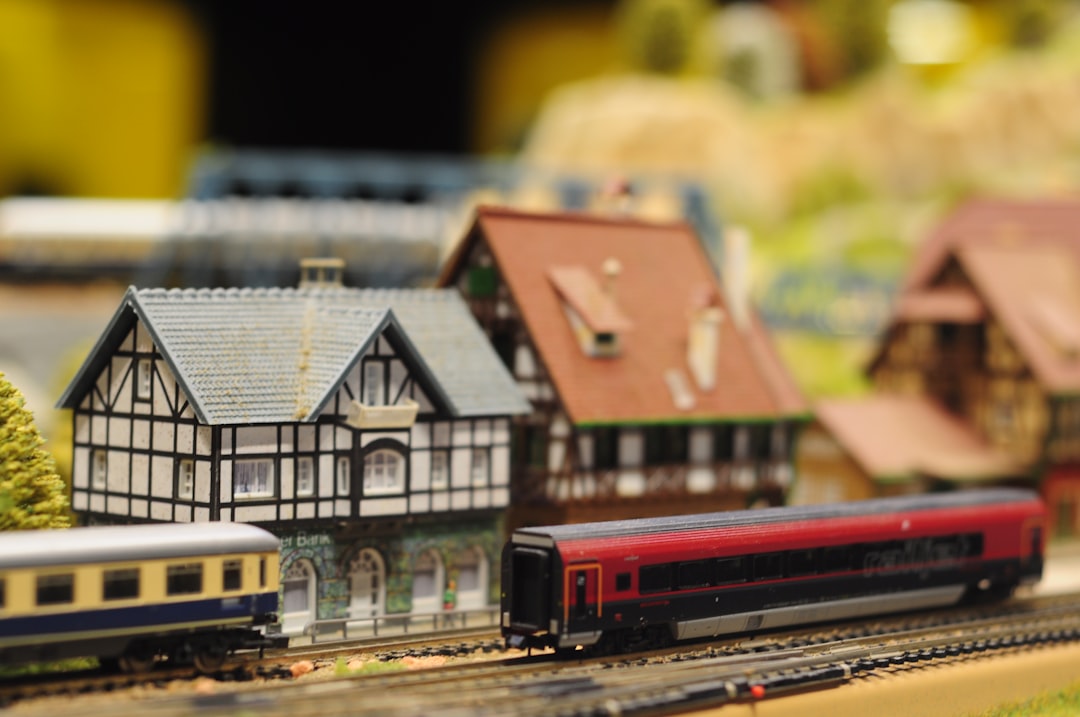
Match small details to your chosen era for coherence:
1920s-1930s: Model A cars, gas street lamps, hand-lettered store signs, unpaved side streets, early telephone poles.
1940s-1950s: Mid-century cars and pickup trucks, electric street lamps, neon signs, painted brick storefronts, phone booth, milk delivery trucks.
1960s-1970s: Muscle cars and station wagons, fluorescent-lit gas stations, chain restaurants entering small towns, more asphalt everywhere.
1980s-2000s: Older buildings updated with modern signage, satellite dishes on houses, gas station chains replacing independent stations.
Modern (2010s-2020s): Contemporary vehicles, LED signage, cell towers on nearby hills, small businesses mixed with vacant storefronts (the modern reality).
Building Sources
O-gauge buildings are produced by several manufacturers:
Lionel: Extensive line of American-style buildings covering stations, storefronts, and industrial structures. Bright colors, durable construction, ready-to-run.
MTH: Scale-detailed buildings, often based on specific American prototypes. More refined than Lionel but with a similar range.
Woodland Scenics: Kit and finished buildings in various styles. Good for filling out smaller structures like houses and small businesses.
Ameri-Towne: Highly detailed craftsman-quality buildings in period American styles. Premium priced but visually superior.
Menards: Value-tier O-gauge buildings that appear seasonally at Menards home improvement stores. Genuinely surprising quality at their price points.
Browse O-gauge buildings on Amazon for current pricing across manufacturers. For structure kit picks specifically, see our best O-gauge building structure kits 2026 guide.
Building the Town in Stages
Don't try to build a complete town in one weekend. Realistic small towns evolve over the modeler's development. A staged approach:
Stage 1 — The Station and Immediate Surroundings: Station, a warehouse or freight house, one storefront, and a small parking or platform area. Enough to say "there's a town here."
Stage 2 — The Main Street: Add three to five more storefronts, a bank, a post office, a church. Now there's a downtown to look at.
Stage 3 — The Neighborhoods: A few houses on side streets behind the downtown. Cars parked outside. People walking on sidewalks.
Stage 4 — Industrial Extensions: Warehouses, small factory, grain elevator or lumber yard, whatever justifies the freight operations you want to run.
Stage 5 — Small Details and Life: Signs, benches, small vehicles, figures, animated elements. This stage keeps going indefinitely.
Frequently Asked Questions
How many buildings do I need for a small town on my O-gauge layout? A minimum convincing town has 8-12 buildings. A well-developed town scene typically has 20-40 buildings. Larger urban scenes can support 50+ buildings.
What's the best size for a small-town scene on a 4x8 layout? A 2x4 foot section dedicated to a small town works well on a 4x8 layout. Enough space for a station, main street, and immediate surroundings.
How much does it cost to model a small town in O-gauge? A basic small town with 10 buildings runs $150-$400. Well-developed towns with 25-40 buildings run $500-$1,500. Premium craftsman-quality buildings can add significantly to the total.
Should I light the buildings in my small town? Highly recommended. Interior lighting transforms building appearance dramatically and enables night-scene photography that showcases the layout's best.
What era is easiest to model in a small town? The 1940s-1950s is the most-modeled era because the buildings, vehicles, and infrastructure are widely available and the aesthetic is beloved. Modern-era small towns work but require specifically modern buildings and vehicles.
Final Thought
A small town transforms an O-gauge layout from a track loop into a working railroad with a destination. Start with the station, build outward through the essential buildings, and evolve the scene over months or years as you learn what specific details make your town feel real. The result is one of the most satisfying long-term projects in the hobby — a modeled world where every train movement has purpose. For broader layout context, see our ultimate vibe train room setup guide.
Newsletter
Weekly O-gauge tips & reviews
New reviews, layout ideas, and hobby news — straight to your inbox.