Buying Lionel Trains on eBay: A Real-World Guide to Not Getting Burned
June 22, 2026
eBay is still the biggest single marketplace for used Lionel trains, and after years of buying and a few painful lessons, I want to put down what I actually wish someone had told me before I bid on my first postwar locomotive. This isn't a checklist a chatbot generated. It's the stuff that matters: how to read a listing, what questions to send before you bid, how scammers actually work on this platform, what happens when a piece arrives broken, and when to just walk away.
If you've been thinking about buying Lionel on eBay, or you've gotten burned once and want to know what went wrong, this is for you.
Why eBay Is Still the Move, Even With the Risks
Before getting into the warnings, the honest case for eBay: it has more Lionel inventory than any other single source. Rare road names that don't come around at dealers for years show up on eBay every week. Estate sales dump full collections onto the platform regularly. Postwar variations you'd never see at a Greenberg show table are sitting in some grandkid's attic and going up on auction tonight.
The downside is that eBay is also where the worst sellers operate, where description quality varies from professional to nonexistent, and where you can't put your hands on the locomotive before you commit. Trainz and Mario's and Charles Ro give you graded condition and easy returns. eBay gives you reach and price discovery but makes you do the work.
The good news is that the work isn't that hard once you know what to do.
Read the Photos Before You Read the Text
The single most important habit: look at the photos first, with the title and description hidden if you can. Sellers write what they want you to believe. Photos show what they actually have.
A good Lionel listing has eight to fifteen photos: full side from both sides, front, back, top showing the cab, underside showing model number and trucks, close-ups of any damage, and a clear shot of the original box if present. If a $400 listing has three blurry phone photos, the seller either doesn't know what they have (sometimes a buying opportunity, sometimes a disaster) or is hiding something. Either way, ask for more photos before you bid.
Stock photos are a giveaway. eBay technically allows generic catalog images for new-in-box items but most actual used pieces should be photographed individually. If the listing photo looks too clean, too well-lit, and too studio-perfect to be someone's kitchen-table snapshot, ask the seller for photos of "the actual locomotive you're shipping." If they balk, walk.
What to Look for in the Photos You Do Get
Paint is the most common deception zone. Real factory Lionel paint has small inconsistencies — a paint run somewhere, the lettering slightly off-center on one side, factory pad-printing that's just slightly fuzzy at the edges. Restored or repainted pieces often look better than original. Too clean is a warning sign. Pull the image in to maximum zoom and look at the edges where paint meets metal. Brush marks under magnification are a tell. So is paint where there shouldn't be paint — on screws, on rivets, on interior surfaces visible through the cab windows.
Check the lettering against catalog reference. Greenberg's Guide to Lionel Trains is the standard book. The road numbers, the font, the position of the markings all tell you whether you're looking at original factory work. Repainted pieces frequently use slightly wrong fonts or get the road number positioning wrong because the painter was working from memory or from a catalog photo that didn't show every angle. If you're looking at something supposedly worth $1,500 because of a rare variation, you really do need to verify the variation is genuine, not a $300 base piece someone repainted last weekend.
Wheels and rollers tell you about use. Heavily worn drivers with grooves in the tread mean the locomotive ran hard for years. Pristine wheels on a piece that's supposedly 60 years old means either it was almost never run (rare and valuable) or the wheels were replaced (less rare, less valuable, and the seller should disclose). Pickup rollers should show wear consistent with the rest of the piece.
Send the Seller a Message Before You Bid
This single habit has saved me more money than anything else. Before bidding on anything above $100, message the seller and ask three questions:
First: "Has this locomotive been run recently, and does it run smoothly forward and reverse?" The seller's answer tells you whether they've actually tested it or are selling sight-unseen from a collection. "Tested and runs great" with details (how long, what track, what speed range) is reassuring. "I haven't powered it up but it should work" is a major risk you need to price in. "Sold as-is for parts" means assume it doesn't run.
Second: "Are all the original parts present, and is the paint factory original?" Watch the answer carefully. A seller who knows their stuff will give specific details — what's original, what isn't, whether the smoke unit is original or replaced, whether the headlight lens is original or a reproduction. A seller who says "yes everything original" without elaboration may not actually know.
Third: "What's your return policy if I'm not satisfied?" The default eBay policy is whatever the seller set. Sellers who offer 30-day returns at their expense are confident in what they're selling. Sellers who specify "no returns" are either selling cheap commodity stuff where returns don't pencil out, or they know there's a problem you'll discover.
Sellers who don't respond to messages before bidding aren't sellers you want to buy from. The communication gap before payment is a preview of the communication gap after a problem.
Reading the Seller's Feedback
eBay's feedback system is imperfect but informative. Pay attention to three things.
The raw percentage matters less than the absolute number of feedback transactions. A seller with 99.8% positive and 500 sold items is more trustworthy than a seller with 100% positive and 8 sold items. Volume creates the conditions for complaints, and a high-volume seller who's kept above 99% has earned it.
The recent negative feedback is more meaningful than the percentage. Click into the seller's feedback and read the last 90 days of any neutrals or negatives. The story matters. "Item not as described" repeated three times is a pattern. "Shipping was slow" once isn't. If multiple recent buyers complain about misrepresented condition or fake originality on similar items, you've learned something.
Look for Lionel-specific selling history. A seller who's been moving Lionel trains for years and has consistent positive feedback in the train category is a known quantity. A seller whose entire prior history is electronics or jewelry who's suddenly listing a $2,000 Vision Line locomotive is suspicious. Either they don't know what they have (sometimes okay, sometimes a problem) or the listing is shadier than the feedback shows.
How eBay's Money Back Guarantee Actually Works
This is the single thing every Lionel buyer should understand before bidding on anything expensive. eBay's Money Back Guarantee covers buyers when an item arrives significantly different from the description, doesn't arrive at all, or is damaged. The protections are real, but they have rules.
You have 30 days from the actual or expected delivery date to open a "not as described" case. After 30 days, your options shrink dramatically. If the locomotive arrives and looks fine but actually doesn't run when you put it on the track, you need to test it within that 30-day window. Don't wait three months to power it up.
To win a case, you need evidence. Photos of the item as received. Photos comparing what was promised in the listing to what arrived. Sometimes video of the operational issue. The more documentation you have, the better the outcome.
If the seller refuses to accept a return and refund, escalate to eBay. eBay will usually side with the buyer in genuine "not as described" cases if you have clear evidence. The seller still has to ship-and-receive — meaning eBay will issue your refund and require the seller to provide a return shipping label. If the seller doesn't, eBay covers your refund and pursues the seller separately.
For payment, use eBay's built-in payment system rather than wiring money or paying outside the platform. Sellers occasionally try to get you to pay via Zelle, Venmo, or check "to save fees." Don't. Those payment methods cut you completely out of eBay's buyer protection. The fee savings are not worth the lost protection on a $500 locomotive.
The Specific Scams You'll See
The undisclosed repaint is the most common deception. A common road name gets repainted to a rare road name and listed at the rare road name's price. The buyer doesn't know enough to spot the repaint, pays the rare-piece premium, and ends up with a $200 piece they paid $1,500 for. Defense: verify against catalog photos at multiple zoom levels. The repaint always shows somewhere.
The frankenpiece is a locomotive assembled from parts of multiple Lionel pieces, sometimes spanning different eras. The cab might be postwar, the drive train might be modern, the tender might be from a third locomotive entirely. Defense: look for consistency in mechanical details, screw heads, and component finishes. Genuine Lionel from a single production year has consistent appearance throughout.
The "found in attic" listing where the seller pretends not to know what they have is sometimes a real buying opportunity and sometimes a tactic. Real estate sales do produce uneducated sellers. But "found in attic" is also a setup to dodge accountability — "I'm just selling what I found, I don't know if it runs, no returns." Treat as-is listings as parts pieces no matter what the photos suggest. Bid accordingly.
The reproduction box scam: buyer thinks they're getting a piece with original box, but the box is actually a reproduction that's been weathered to look old. Boxes are a 20-50% value differential, so this matters. Look closely at the printing. Reproduction boxes often have slightly different fonts, different cardboard weight, and printing that's too sharp for the box's apparent age.
The shipping damage shuffle: piece arrives damaged. Seller blames USPS/UPS. Wants you to file a damage claim with the carrier instead of just refunding. This dumps the work on you, and carrier claims for properly insured packages with valid documentation should be the seller's problem, not yours. Use eBay's Money Back Guarantee for damage cases, not carrier claims.
The bait and switch: photos show one piece, you receive a different (similar-looking) piece. Less common but it happens. Defense: detailed photos in the listing make this harder to pull off, which is why you ask for detailed photos before bidding.
Auctions vs Buy It Now vs Best Offer
How you buy matters as much as what you buy.
Auctions reward patience. The classic mistake is bidding early and bidding emotionally. Set a maximum price you'll pay based on the piece's actual current market value (use eBay's "Sold" filter to see comparable recent sales, not asking prices), and snipe in the last 15 seconds with that as your max. eBay auctions are won by buyers with patience and discipline, not by buyers with the loudest enthusiasm.
Buy It Now is for known commodities at reasonable prices. If you've researched the piece, know the market, and the listing is at or below current sold-comparables, just buy. Sometimes the seller has set Buy It Now optimistically high — make sure you're not paying significantly above what the same piece sold for last month on completed auctions.
Best Offer is where you can really save money. Many sellers list pieces at aspirational prices but accept significantly lower offers. As a rough rule, offer 25-30% below the listed Buy It Now for most categories, more if the listing has been sitting a while. The worst case is they say no and you don't buy. Sellers expect negotiation on this platform.
For research, eBay's Sold filter (toggle "Show only: Sold Items" in the search sidebar) shows you what comparable pieces actually closed for in the last few months. This is the most accurate single source of current Lionel market pricing. Don't trust active listings as price reference — sellers ask whatever they want; sold prices are what people actually pay.
The Locomotive Arrives — What to Do First
The 30-day clock starts when you receive the package. Don't waste it.
Open the package in front of a video-recording phone if the contents are valuable. This is paranoid but if the locomotive arrives damaged or differs from the listing, video evidence makes the buyer protection case airtight. Even a continuous unedited video of the unboxing is enough.
Inspect before you do anything else. Compare what you received to what was photographed in the listing. Check the model number, road name, paint, and any specifics that were called out. If something is meaningfully different — different road number, repaint not disclosed, missing parts — document it before you do anything else and start the eBay case immediately. Don't let the seller "make it right" outside the platform. Use the platform's protection.
If everything looks right visually, put the locomotive on powered test track within 48 hours. Run it forward and reverse. Test all the sound and smoke features. Do a longer-duration run (20-30 minutes) to verify the motor doesn't develop heat issues. If anything doesn't work, document it on video with the listing pulled up next to the locomotive showing what was promised. Then open the case.
If everything works, leave honest feedback. The Lionel seller ecosystem on eBay is healthier when good sellers get publicly recognized, just as bad sellers get exposed.
What to Pay vs What to Walk Away From
Reference real comparable sales, not the asking price on the listing you're looking at. eBay's Sold filter is your best tool. The Greenberg Pocket Price Guide is the second-best reference. Established dealer pricing (Trainz, Charles Ro) gives you the high-end ceiling — eBay should generally be below dealer pricing because dealer purchases come with grading and return policies that eBay doesn't.
For postwar Lionel in C-7 condition, most common pieces should be $75-$400. Premium postwar pieces are $400-$1,500. Anything over $1,500 is rare-variation territory and you really need expertise to authenticate. Modern Lionel from the LEGACY era depreciates predictably — figure 50-70% of MSRP for pieces 3-5 years old, 70-85% for Vision Line in C-8+ condition.
If a listing is significantly below comparable sold prices, ask why. Sometimes it's a motivated seller, an uneducated estate sale, or a relisting after a return. Sometimes it's a scam. Investigate before bidding. A piece priced 60% below market with vague photos and a no-returns policy is almost always a problem.
If a listing is significantly above comparable sold prices, just don't bid. Some sellers list aspirationally and the items sit forever. You don't need to overpay just because the listing is in front of you.
The Categories Where eBay Risk Is Highest
Some Lionel categories are higher-risk than others on eBay. The most-faked and most-misrepresented categories are also the most valuable ones, which makes the financial motivation higher for bad sellers.
Rare road name variations on otherwise common pieces. The classic example is the Western Pacific yellow feather 6464 boxcar — a real WP feather is $300-$800, a common 6464 in a different road name is $25-$75. Repainting a common boxcar to a WP feather is straightforward; spotting the repaint takes expertise. If you're buying expensive variations, buy from established dealers, not eBay, until you really know what you're looking at.
Pennsylvania GG1 electric locomotives have multiple color variations with massive price spreads. The five-stripe Tuscan variant brings multiples of the single-stripe price. Repaints are common.
700E Hudson variants from the prewar era. The original 1937 700E is the absolute top of the Lionel collector market. There are also modern reissues of the 700E from the LEGACY and Vision Line era. Listings sometimes blur these together. A modern reissue is worth a fraction of an original. Check carefully.
Mint-in-box postwar locomotives priced significantly above comparable opened examples. Mint pieces with original boxes do command premiums but the premium should be explainable by condition documentation, not just by the seller's confidence.
For the lower-risk categories — common postwar steam (2037, 2055, basic Hudsons), common postwar diesels (basic F3s, GP9s, SW switchers), basic 6464 boxcars in common road names, modern LionChief — eBay risk is much lower because the financial motivation for misrepresentation is smaller. These are the categories where eBay genuinely shines as a buyer.
Building a Long-Term eBay Strategy
The best eBay buyers think in terms of years, not transactions. A few habits compound over time.
Save searches for the specific pieces you want. eBay's saved search system will email you when a new listing matches. For rare road name variations or specific reissues, this is the difference between catching the listing in hour one (good prices) versus hour 24 (typically picked over). I have saved searches running for specific 6464 road names that have been live for three years.
Build relationships with specific sellers. If a particular eBay seller consistently lists quality Lionel at fair prices, follow them. Some sellers will give buyers they recognize first crack at new inventory before listings even go public — but only after you've bought from them a few times without drama.
Read every email Lionel-related thread on the OGR Forum (Online Train Forum) and the Lionel subreddit. Bad sellers get named there. Authentication tips for specific variations get shared there. The community knowledge that makes eBay safer is freely available.
Track your purchases — what you paid, condition, seller, any issues. After a year of tracking, patterns emerge. You'll know which categories are safe to buy on eBay and which require dealer-level care.
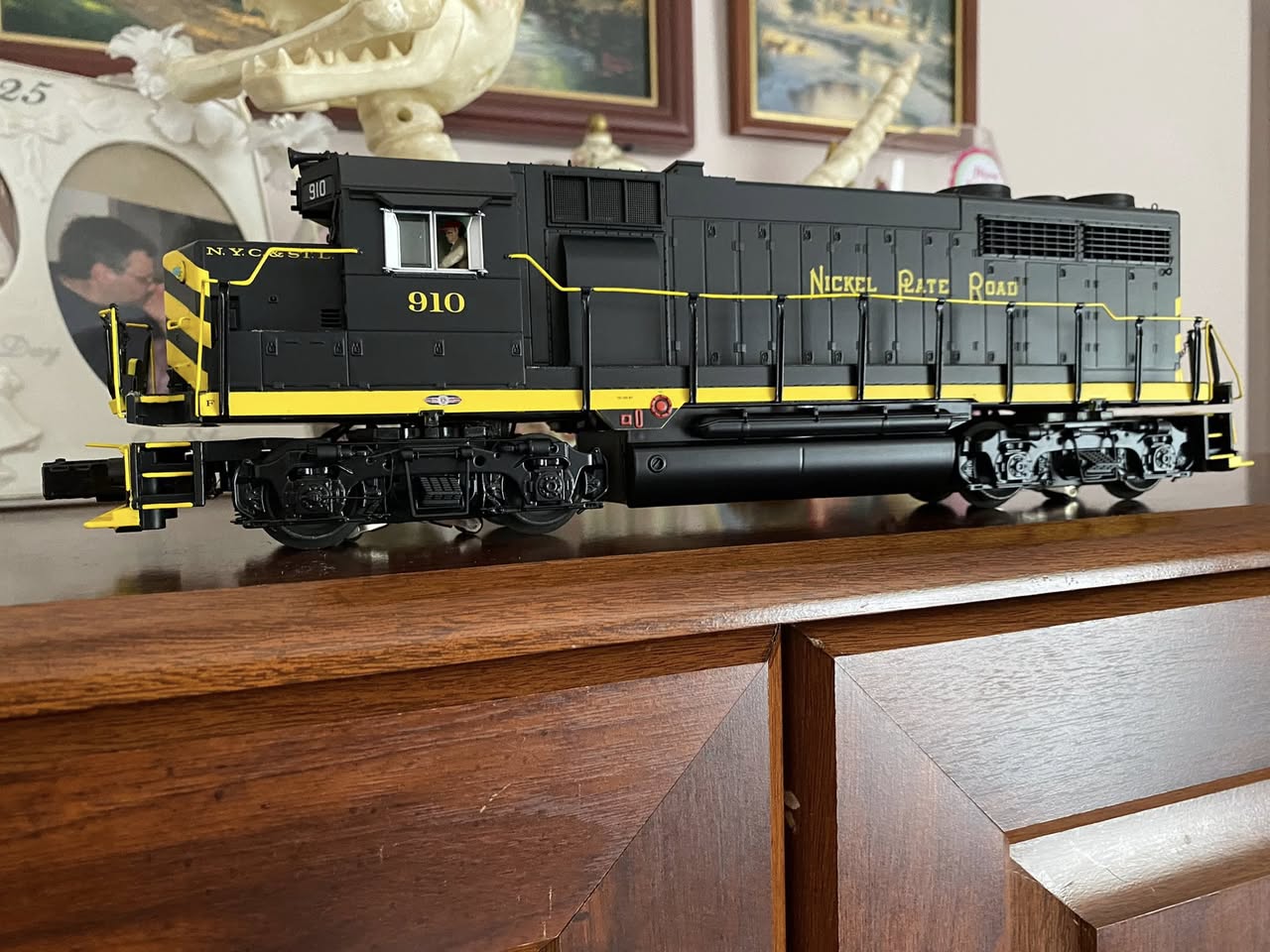
And don't chase. Lionel is a hobby of infinite supply over time. The piece you missed will come around again. Patience compounds in this market.
When to Skip eBay Entirely
Some Lionel purchases just shouldn't happen on eBay. If you're buying a Vision Line flagship locomotive — a Big Boy, Allegheny, or NYC J-3a Hudson — the price premium of buying from an established dealer (Trainz, Charles Ro, Public Delivery Track) over eBay is small relative to the risk reduction. These are $1,500-$2,500 pieces. The protection and authentication of a dealer purchase is worth the $50-$200 markup.
If you're buying a piece you can't authenticate yourself — a rare variation, a piece with claimed mint condition you can't verify — buy from someone who stakes their reputation on authentication. The eBay buyer protection covers "not as described," but "not as described" is harder to prove on subtle authenticity questions than on obvious mechanical failures.
If you find yourself rationalizing — "the photos are bad but the price is great" — walk. The 90% of eBay purchases that go fine make the 10% that go badly really painful because you remember the value differential and forget that you got lucky on the other transactions.
For specific dealer recommendations, our guide to where to buy O-gauge trains covers the major established dealers who serve as the alternative to eBay risk.
The Questions Buyers Actually Ask
Is buying Lionel on eBay safe? Safer than it used to be, thanks to the Money Back Guarantee, but only if you do the work. The buyer protections cover genuine misrepresentation if you document the issue and file within 30 days of delivery. Most buyers who get burned skipped the documentation or missed the timing window.
How can I tell if an eBay Lionel listing is a scam? Watch for stock photos instead of actual item photos, vague descriptions, no-returns policies on expensive pieces, prices dramatically below market without explanation, sellers with low feedback or recent negative feedback patterns, and resistance to specific buyer questions. Multiple flags together are a much stronger signal than any single one.
What's the difference between eBay and a real Lionel dealer? Dealers grade condition, guarantee authenticity, accept returns, and have reputations they actively protect. eBay gives you broader selection and lower average prices but transfers the verification work to you. For low-risk common pieces, eBay wins on price. For high-value or rare pieces, dealers win on safety.
What if my Lionel locomotive arrives broken? Open an eBay case for "item not as described" within 30 days of delivery, with photos and (ideally) video documenting the issue. eBay will require the seller to accept return for refund. If the seller doesn't cooperate, escalate the case and eBay will side with you in clear cases.
Should I use PayPal or eBay's payment system? Use whatever eBay puts in front of you at checkout. That payment goes through eBay's protection. Avoid sellers who want to bypass the eBay payment system — that's where buyer protection ends.
How do I find current market prices for Lionel on eBay? Use eBay's Sold filter — toggle "Sold Items" on in the search sidebar — to see what comparable pieces actually closed for in the last 90 days. This is more accurate than any guide or asking-price reference. For overall value context, our Lionel train value guide covers the broader market.
A Last Thought
The biggest mistake eBay Lionel buyers make isn't getting scammed — it's getting impatient. The market produces continuous flow. The piece you want will be listed again next week, or next month, or by a better seller next quarter. The buyers who do well on this platform over years are the ones who treat every individual listing as optional and only commit when the price, the seller, the photos, and the description all align.
Buy a few low-stakes pieces first. Develop your eye for what genuine factory condition looks like. Build feedback as a buyer with the established sellers. Learn the difference between a $200 piece advertised honestly and a $400 piece advertised optimistically. Then when the rare road name you've been hunting for years finally appears, you'll be ready to evaluate it in five minutes and bid with confidence.
The hobby is full of generous, knowledgeable sellers who genuinely want to keep these pieces moving to people who'll appreciate them. They're on eBay too, alongside the bad actors. The work is learning to tell them apart, and the work is worth it.
For broader buying-side context, our counterfeit detection guide covers authentication in more depth, and our used Lionel inspection guide covers what to do once a locomotive is in your hands.
Newsletter
Weekly O-gauge tips & reviews
New reviews, layout ideas, and hobby news — straight to your inbox.