Best Shelf-Switching Layouts for O-Gauge: Complete 2026 Small-Space Design Guide
October 2, 2026
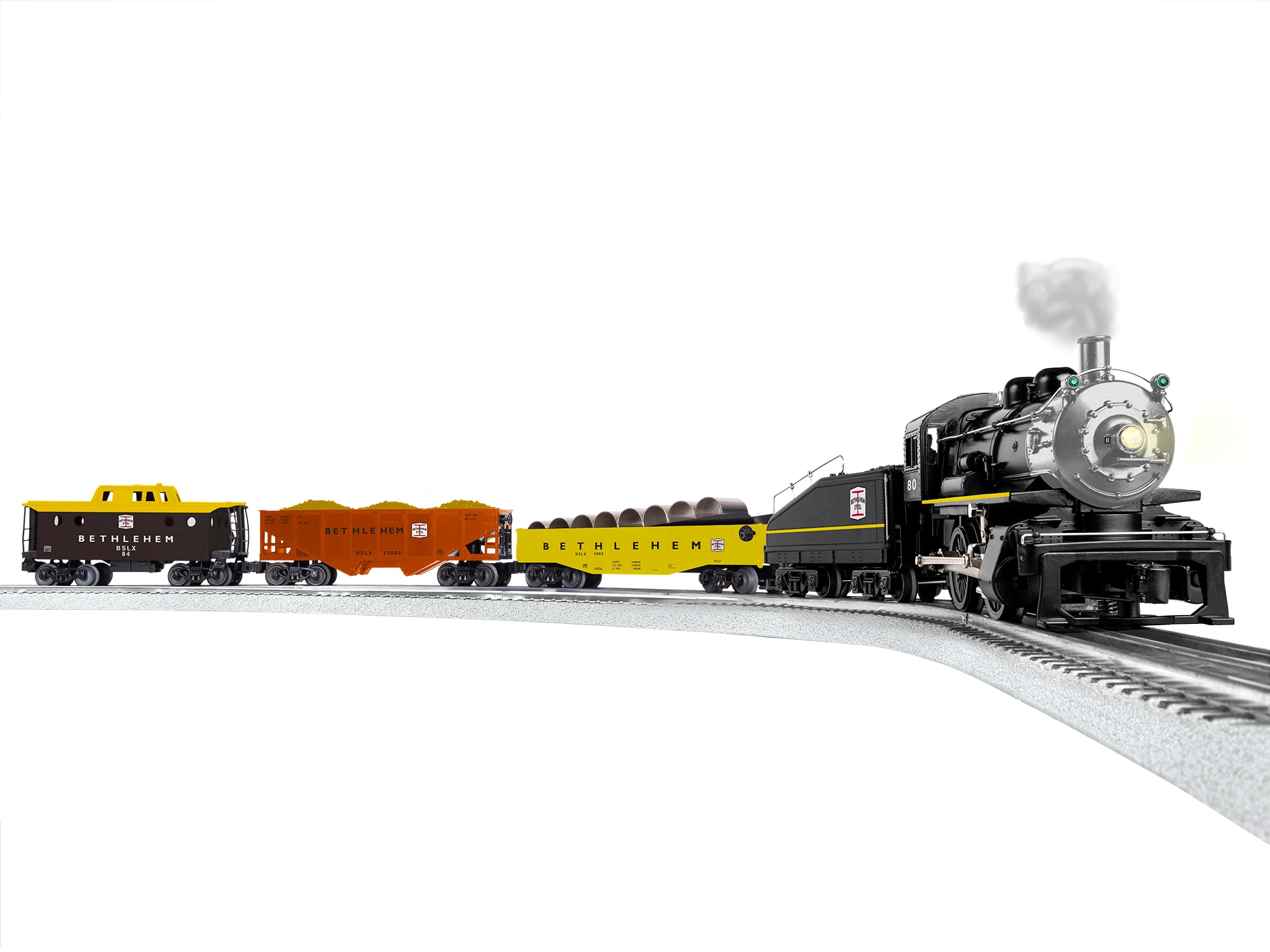
A shelf-switching layout is one of the smartest ways to run O-gauge trains when floor space is limited. A long, narrow bench along a wall — typically 12-18 inches deep and 4-10 feet long — holds a complete freight-switching railroad with industry sidings, a passing track, and realistic operating potential. This complete 2026 guide covers shelf-switching layout design: dimensions that work, five proven track plans, locomotive and rolling stock selection, scenery, and the operating approaches that make shelf layouts enduringly satisfying.
Why Shelf Layouts Work
Shelf layouts answer a specific problem: how do you build real O-gauge model railroading in a space where a full table isn't feasible? Advantages over conventional 4x8 tables:
Minimal floor space. A shelf 14 inches deep by 8 feet long consumes almost no useful floor area. Fits along a wall in an apartment, a den corner, or a basement workshop.
Walk-up operation. Shelf height (typically 42-48 inches) puts the trains at a comfortable viewing and operating position. No bending required.
Point-to-point operation. Rather than continuous running (which demands tight-radius returns), shelf layouts emphasize prototype-realistic switching between industries.
Easy to build and modify. Shelf construction uses standard lumber — 1x4 or 1x6 shelf boards with simple bracket support. No complex benchwork.
Portable to new homes. Shelf layouts separate into transportable sections. A 2x6 shelf section fits in a car for moving to a new residence.
Progressive expansion. Start with a single 4-foot shelf; add 2-foot sections as space allows. The layout grows with the operator's commitment.
Shelf Dimensions That Work
Depth: 12-18 inches. Deeper than 18 inches makes track access difficult from the front; shallower than 12 inches constrains design options.
Length: 4-12 feet typical. Minimum 4 feet for meaningful operation; 8-10 feet is the sweet spot for extensive switching; 12 feet maximum before benchwork spans become unreliable.
Height: 42-48 inches typical. Standing-height operation. Child-friendly layouts can go lower (36-40 inches).
Minimum turnout radius: O-27 or O-31 switches. Shelf-switching rarely needs larger turnouts.
Minimum locomotive wheelbase: 0-4-0 to 2-6-0 steam, GP-series or RS-3 diesel. Larger locomotives struggle with shelf-switching turnout angles.
The Five Best Shelf-Switching Layouts
Plan 1: Simple Single-Industry Shelf (4 feet)
The minimum viable shelf. One long passing track with a single industry siding. Switch cars in and out of the industry; occasionally run through on the passing track.
Track: 4 feet main, 2 feet passing siding, 1 industry spur with 1 turnout.
Operation: Deliver and retrieve cars at the industry. Pass a train through on the main line.
Best for: First-time shelf builders, kids learning switching, limited-space apartments.
Plan 2: Industrial Twin-Track with Two Industries (6 feet)
A main line with two industries on separate spurs. Classic early-shelf design.
Track: 6 feet main, 2 industries with 2 turnouts, 1 crossover.
Operation: Switch cars between the two industries. Build and break down freight consists. Prototype-realistic yard-switching operation.
Best for: Serious operators wanting real switching, prototype-oriented modelers building branch line character.
Plan 3: Yard-Based Shelf (8 feet)
A compact 3-track yard on one end, with a few industries scattered along the length. The yard acts as classification and staging.
Track: 8 feet main, 3-track yard, 2-3 industry sidings, 4-5 turnouts.
Operation: Build trains in the yard. Deliver cars to industries. Return cars to yard. Shuffle yard tracks to sort cars for various destinations.
Best for: Operators wanting full freight-yard experience in minimum space, prototype-focused shortline modelers.
Plan 4: Multi-Industry Shelf (10 feet)
Extended shelf with 4-5 industries along the length. Each industry has unique customer requirements.
Track: 10 feet main, 4-5 industry sidings each with 1 turnout, 1 holding track for locomotive runaround.
Operation: Deliver cars to each industry per customer need. Pick up outbound cars. Build consists for departure. Full day's worth of operating action.
Best for: Serious operators building hours-of-play layout in minimum floor space, prototype shortline modelers.
Plan 5: Twin-Shelf L-Shape (6+6 feet)
Two 6-foot shelves meeting at a right angle. Together they form a 12-foot linear layout with a corner connecting the two.
Track: 12 total feet main, 3-4 industries, corner curve, 5-6 turnouts.
Operation: Full-corner operation with industries on both shelves. More complex switching challenges.
Best for: Corner-of-room installations, operators wanting maximum operating complexity in shelf form.
Benchwork Construction for Shelf Layouts
Standard shelf: 1x4 shelf board (0.75" x 3.5") on brackets mounted 42-48" above floor. Simple. Durable.
Deeper shelf: 1x6 shelf board (0.75" x 5.5") for 12-14 inch depth. Allows for more scenery depth and industry structures.
L-girder shelf: 1x4 L-girder construction for 14-18 inch depth. More complex but provides maximum stability and scenic depth.
Modular sections: Build in 2-foot sections connected by bolts. Allows disassembly and relocation.
Scenery sub-roadbed: 2" foam sheet (pink or blue) glued to shelf for grade variation and scenery relief.
Track Selection for Shelf Layouts
FasTrack: Lionel's standard O-27 track. Fast assembly, high reliability, extensive turnout selection.
O-27 traditional: Classic Lionel O-27 with lower profile and traditional appearance. Still available from Lionel.
Atlas O 3-rail: Scale-detail 3-rail track with sturdy construction. Excellent reliability.
O-31 vs O-27: O-31 switches (larger radius) accommodate slightly larger locomotives. O-27 switches are more compact.
Locomotive Selection
Shelf layouts need switchers and small road power:
Steam switchers: 0-4-0 saddle tank engines are the ideal shelf locomotive. Short wheelbase, prototype-accurate for industrial yards. 2-6-0 Prairie types work on larger shelves.
Diesel switchers: SW-series switchers (SW8, SW900, SW1500) are perfect prototypes for shelf operation. GP18, GP38, GP40 road switchers also work.
Avoid: Large steam (Pacific, Mikado, Berkshire, articulated), long diesel power (SD40-2, ES44AC, GEVO). These need O-54+ curves and don't fit shelf-switching curves.
Freight Car Selection
Short freight cars work best on shelves:
Boxcars: 40-foot scale boxcars (Lionel 6464-series or equivalent) fit shelf curves easily.
Hoppers: 2-bay 40-foot hoppers work well. Avoid 4-bay or 100-ton hoppers which push shelf curves.
Tank cars: 40-foot single-dome tank cars fit. 2-dome and 4-dome require larger curves.
Flatcars: Standard 40-foot flatcars with loads are perfect shelf freight.
Avoid: 86-foot auto parts boxcars, 100-foot tank cars, modern double-stack intermodal. All too long for shelf-switching curves.
Scenery for Shelf Layouts
Shelf layouts benefit from focused, high-detail scenery:
Backdrop: A painted or printed backdrop behind the shelf extends apparent depth significantly. Essential for shelf aesthetic.
Industrial focus: Shelf layouts work best with industrial scenery — warehouses, factories, loading docks, team tracks. Rural shelf scenery feels empty.
Vertical interest: Buildings taller than they are wide match the shelf aesthetic. Elevators, tanks, chimneys add vertical dimension.
Ground cover: Weeds, gravel, dust — industrial character. Not manicured lawn.
Lighting: Mounted strip lighting above the shelf dramatically improves operating experience. Essential for enclosed shelf installations.
Operating a Shelf Layout
Shelf operation is fundamentally different from continuous-running layouts:
Session-based: Each operating session is a complete freight-moving "shift." Start with cars in position, end with cars delivered.
Car cards or waybills: Each car has a card specifying where it needs to go. Operator moves cars accordingly.
Timetable or sequence: Operate industries in specific order to represent real railroad operating practice.
Realistic timing: Deliver cars, service industries, build outbound consist. 30-60 minute operating sessions.
Multiple operators: Shelf layouts work well with 1-2 operators simultaneously.
Frequently Asked Questions
What's the minimum shelf length that gives real operation?
4 feet is the practical minimum. Shorter shelves constrain switching options to a few turnouts worth of movement.
Can I run passenger trains on a shelf layout?
Yes, but short cars (60-70 foot scale) and short consists (2-3 cars) work best. Long passenger cars overflow shelf-switching curves.
Do I need a reversing section on a shelf layout?
Not required for point-to-point switching operations. Shelf layouts rarely include reversing loops.
Can I use command control on a shelf layout?
Absolutely. LionChief Bluetooth, TMCC, and LEGACY all work on shelf layouts. DCS compatibility excellent for MTH equipment.
How much does a shelf layout cost?
Basic 6-foot shelf with LionChief starter equipment: $400-$600. Full-featured 10-foot shelf with LEGACY motive power and detailed scenery: $1,500-$2,500. Progressive investment possible.
Verdict
Shelf-switching layouts are the practical solution for O-gauge railroading when floor space is constrained. Real operating potential, prototype-realistic switching, minimal space requirements, and progressive expansion all combine in a package that fits in nearly any residential setting. Start with Plan 1 (Simple Single-Industry) if you're brand new; build up to Plan 4 (Multi-Industry) as your operating interest grows. For related layout guidance, see our 4x6 track plans guide, our L-shape corner layouts, our FasTrack installation guide, our freight yard design, and our LionChief locomotive picks.
Newsletter
Weekly O-gauge tips & reviews
New reviews, layout ideas, and hobby news — straight to your inbox.