What Curve Radius Should You Use on an O-Gauge Layout? Complete 2026 Guide
June 2, 2026
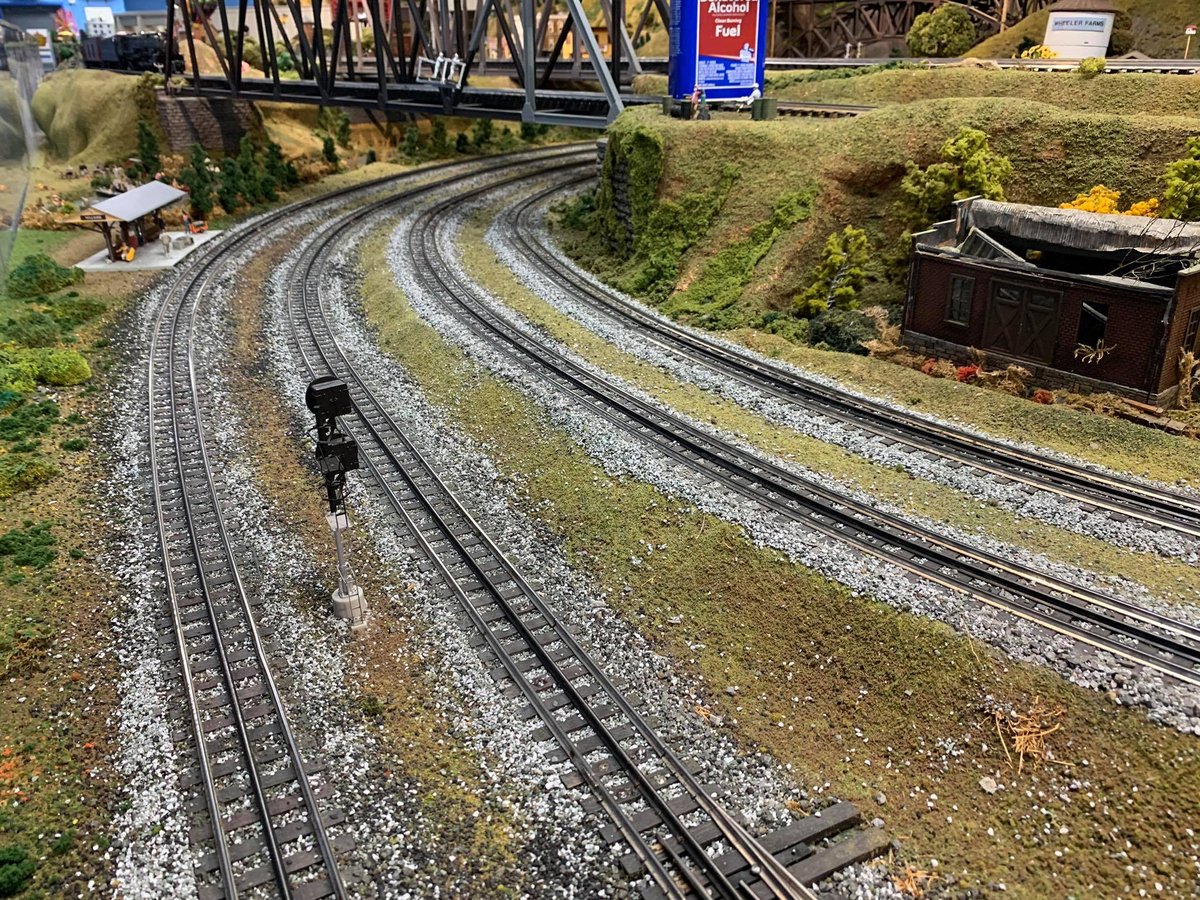
What curve radius should you use on an O-gauge layout? It's one of the most important decisions in layout planning — get the curves right and every Lionel, MTH, and Williams locomotive runs smoothly; get them wrong and you'll be limited to small switchers forever. This vibetrains.com guide explains the O-gauge curve radius standards (O-31, O-36, O-42, O-54, O-72, and beyond), what trains run on what, and how to plan curves so your layout works for the equipment you actually want to run.
Quick Answer: O-Gauge Curve Radius Recommendations
For a basic starter loop with small locomotives: O-31 (31-inch diameter). For a versatile layout that handles most O-gauge locomotives including mid-size steam and modern diesels: O-36 or O-42. For scale-length passenger cars and large steam like the Hudson, Berkshire, or Allegheny: O-54 minimum. For articulated steam like the Big Boy, Challenger, or Class A 2-6-6-4: O-72 minimum, O-84 looks better. If you're building a layout and plan to ever run large equipment, design around O-54 or larger from the start — retrofitting bigger curves later is painful.
How O-Gauge Curve Diameter Is Measured
O-gauge curves are named by their nominal diameter in inches. O-31 means a 31-inch diameter circle (about 15.5-inch radius). O-72 means a 72-inch diameter circle (36-inch radius). The actual track-to-track measurement varies slightly between manufacturers — Lionel FasTrack O-36 is technically 36 inches center-to-center between opposite rails — but the labeling convention is consistent. Bigger numbers mean wider curves, more space required, but smoother running for larger equipment.
O-31: The Tightest Standard Curve
O-31 (31-inch diameter) is the tightest standard O-gauge curve and the default in most starter sets. The advantage is space — an O-31 oval fits on a 4x6 sheet of plywood with room for a passing siding. The disadvantage is equipment compatibility — only short-wheelbase locomotives (small steam, small diesels like SW switchers) and short rolling stock (40-foot freight cars) track reliably on O-31. Modern large locomotives won't run, period. For a brand-new vibe trains hobbyist setting up around the Christmas tree or in a corner of a basement, O-31 is fine — just know you're committing to small equipment. For more on starter setups, see our Lionel train set setup guide.
O-36: The Modern Starter Standard
O-36 (36-inch diameter) is the most common starter set curve in modern Lionel sets and a meaningful step up from O-31. The wider geometry means slightly smoother running, better appearance, and compatibility with most LionChief and LionChief Plus 2.0 locomotives including 4-6-2 Pacifics and most diesel road switchers. An O-36 oval needs about 4.5 feet of width. If you're starting fresh in 2026, build around O-36 minimum — O-31 looks tighter than necessary on modern layouts.
O-42: The Sweet Spot for Most Layouts
O-42 (42-inch diameter) is the most versatile O-gauge curve diameter and the radius most experienced hobbyists recommend for a general-purpose layout. O-42 runs all small-to-medium locomotives reliably, looks proportional rather than toy-like, and handles full-length passenger cars surprisingly well. An O-42 loop needs about 5 feet of width — fitting on a 5x10 table or a standard 4x8 only if you give up the middle entirely. For most 4x8 builders, O-42 is the practical maximum; for anything bigger, plan around O-42 main curves with longer siding curves where space allows. For 4x8 planning specifically, see our 4x8 layout planning guide.
O-54: The Scale Threshold
O-54 (54-inch diameter) is where O-gauge starts looking like real scale model railroading. Long passenger cars, full-length scale boxcars, and most six-axle diesels and large steam locomotives all run gracefully on O-54. This is where serious enthusiasts plan their layouts — O-54 main lines with O-72 in highly visible scenic areas. An O-54 loop needs about 5.5 feet across; for a basement layout this is well within reach.
O-72: The Articulated Standard
O-72 (72-inch diameter) is the minimum recommended curve for articulated steam locomotives — the Lionel Big Boy 4-8-8-4, Challenger 4-6-6-4, Allegheny 2-6-6-6, and similar big-power engines all want O-72 to track properly. Scale-length passenger cars also look dramatically better on O-72 than on tighter curves. The downside is space — an O-72 loop needs 6+ feet across, which puts it firmly in dedicated train room territory. For premium Vision Line locomotives, O-72 is the minimum, full stop.
O-84, O-96, and Beyond
The largest O-gauge curves — O-84 (84-inch diameter), O-96, and even O-108 — produce the most realistic-looking running and accept the largest locomotives without strain. These are exhibition-layout sizes and require correspondingly large rooms. The visual difference between O-72 and O-96 is significant when you see them side by side — at O-96 the curves look almost prototypically gentle. If you're planning a large basement or garage layout, push your curve sizes as wide as you can fit; the smoother running and better appearance reward the space.
Curve Compatibility by Locomotive Type
Quick reference for what runs on what:
O-31 minimum: SW8, SW9, NW2 switchers, GP7, GP9 (some), 0-6-0 small steam, 4-4-2 small steam, short 40-foot freight cars.
O-36 minimum: Most LionChief road switchers, 4-6-2 Pacific steam, GP38, GP40, U28B.
O-42 minimum: 2-8-2 Mikado, 2-8-4 Berkshire, F3 and F7 diesels, 6-axle diesels (SD40, SD45), most modern Lionel LionChief Plus and base LEGACY.
O-54 minimum: 4-6-4 Hudson, 4-8-4 Northern, scale-length passenger cars, most LEGACY mainline steam.
O-72 minimum: Big Boy 4-8-8-4, Challenger 4-6-6-4, Allegheny 2-6-6-6, Class A 2-6-6-4, ATSF 2-10-4, large modern locomotives.
Always check the manufacturer's stated minimum curve radius for each locomotive — listed in product specs and in our individual reviews.
How to Plan Your Layout Curves
Plan in this order: decide what's the biggest locomotive you want to run, set your minimum curve diameter accordingly, then use that radius for the entire main line. Use larger curves wherever space permits — wider curves look better on the visible portions of the layout. Hidden track and tight back-of-mountain curves can use tighter radii since they don't show. Reverse loops, helixes, and yards typically use the tightest radius your equipment will accept. For more on layout planning, see our ultimate vibe train room setup guide.
Can You Mix Curve Radii on the Same Layout?
Yes, and most serious layouts do. Most O-gauge track systems (FasTrack, Atlas O, MTH RealTrax) include transition pieces or simply allow direct connection between different curve sizes — though you'll want to add a short straight section between dramatically different curves for smooth operation. The advantage of mixing is space efficiency: use larger curves for the visible main line, tighter curves for yards and tucked-away corners. For track-system comparisons, see our FasTrack vs Atlas vs RealTrax guide.
Frequently Asked Questions
What is the smallest O-gauge curve? O-27 is the smallest historical Lionel curve (27-inch diameter), but it's been largely replaced by O-31 as the modern minimum. Most current Lionel locomotives require O-31 or larger.
What curve radius does the Lionel Big Boy need? The Lionel Big Boy 4-8-8-4 requires O-72 minimum and looks substantially better on O-84 or larger.
Can a Hudson run on O-31 curves? Older smaller Hudsons can run on O-31 but bind; the modern scale-detail Hudson (Vision Line and LEGACY tiers) requires O-54 minimum.
What's the most popular O-gauge curve size? O-36 and O-42 are the most common curve sizes for modern home layouts, balancing locomotive compatibility against space requirements.
Does curve radius affect train speed? Tighter curves require slower speeds to track reliably. Larger curves allow more realistic running speeds and smoother operation overall.
Final Word
The right O-gauge curve radius depends on the equipment you want to run and the space you have available. O-31 for tight starter setups, O-42 for versatile general-purpose layouts, O-72 for the big-power articulated steam you've been eyeing. Plan curves first, scenery second — getting curves wrong is the layout mistake that's hardest to fix later. For specific layout track plans, see our 4x8 layout planning guide.
Newsletter
Weekly O-gauge tips & reviews
New reviews, layout ideas, and hobby news — straight to your inbox.