Lionel Postwar Favorites: The 5 Most Iconic O-Gauge Sets from the 1950s
April 11, 2026
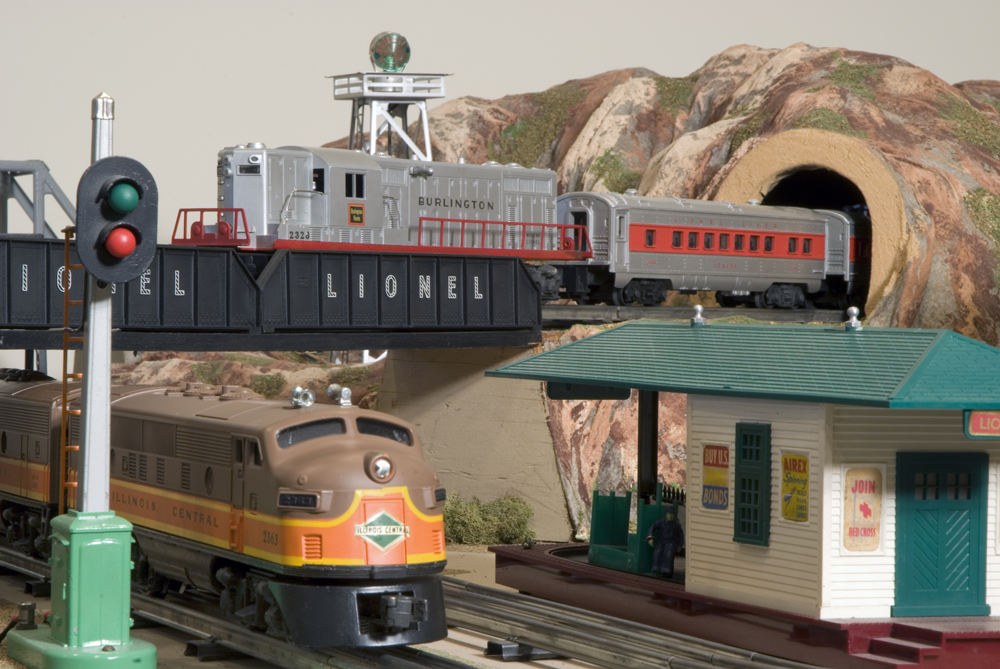
The Golden Age of Lionel Trains
If you want to understand why O-gauge model trains still inspire such fierce loyalty, you need to go back to the 1950s. Lionel wasn't just a toy company — it was the toy company, responsible for an estimated one out of every three American boys receiving a train set under the Christmas tree at some point during the decade. The postwar boom created not only unprecedented demand but also some of the most beautifully engineered, best-remembered locomotives and sets in the hobby's history.
Collectors still hunt these pieces at train shows, estate sales, and eBay listings with the same intensity today. Here are five postwar Lionel sets from the 1950s that defined the era — and what to look for if you want to add them to your collection.
---
1. The 773 Hudson (1950, 1964–1966)
If there is one locomotive that represents Lionel's postwar ambition, it's the 773. Modeled after the New York Central's famous J-3a steam locomotive, the 773 was Lionel's flagship steamer — detailed, heavy, and powerful. It ran with a scale-length 2426W tender and was marketed as the top of the line.
A complete, running 773 in excellent condition can fetch $800–$1,500 today. Look for crisp lettering, intact smoke unit, and the original tender with working whistle. Reproductions exist, so always verify with a knowledgeable seller.
---
2. The 2340 Pennsylvania GG1 (1955–1957)
The GG1 is arguably the most recognizable electric locomotive in American railroad history, and Lionel's die-cast version is one of the most sought-after postwar pieces. The 2340 came in dark Tuscan red with five gold pinstripes — an exact nod to Raymond Loewy's iconic industrial design for the Pennsylvania Railroad.
What makes this one special for collectors is the die-cast body: heavier and more detailed than the earlier sheet-metal versions. A complete example with original box can command $400–$900 depending on condition. The gold stripes are prone to fading and flaking, so condition matters enormously here.
---
3. The 2056 Hudson Freight Set (1952–1953)
Not every iconic postwar set was a top-of-the-line item. The 2056 was a mid-range Hudson steam locomotive that appeared in several popular outfit numbers during the early 1950s. It was paired with freight cars that still feel like quintessential Lionel: the 6462 gondola, 6465 Sunoco tank car, and 6457 caboose.
This set introduced millions of kids to the hobby and today represents one of the most affordable entry points into postwar collecting. Complete outfits with original boxes can be found for $200–$450 — reasonable for a piece of genuine American toy history. Look for the correct 2046W tender to confirm originality.
---
4. The 2353 Santa Fe F3 AA Units (1953–1955)
Diesel power arrived in the postwar Lionel lineup with enormous fanfare, and nothing captured imaginations quite like the warbonnet-painted Santa Fe F3. The 2353 set — two powered A-units in red and silver — was part of Lionel's bold move toward the modern diesel era that was reshaping American railroading in real life.
These units look spectacular on the layout and run reliably when properly maintained. Because they were popular, they're not rare — but finding a matching pair with strong paint and working nose lights takes patience. Budget $300–$600 for a clean, running pair. Watch for repaints, which significantly reduce value.
---
5. The 746 Norfolk & Western J-Class (1957–1960)
Lionel saved some of its finest engineering for the end of the decade. The 746 was modeled after the N&W Class J — one of the last great steam locomotives built in America — and it remains one of the most impressive postwar steamers ever produced. The long, streamlined boiler and matching passenger cars (the 2575 series) make for a stunning consist.
This one commands serious money in top condition: $600–$1,200 for the locomotive alone, more with original passenger cars and boxes. The smoke unit and Magne-Traction system should both be confirmed working before purchase.
---
Tips for Buying Postwar Lionel Today
Check the motor first. Postwar Lionel motors are durable but decades old. Ask the seller to run it — a smooth, quiet start is a good sign. Grinding or hesitation means cleaning or repairs ahead.
Original boxes add 20–40% to value. A locomotive with its original box, insert, and paperwork is worth substantially more to serious collectors. If you're buying to display or run, you can save money by skipping boxes.
Avoid repaints and reproductions. Reproduction parts are common in the postwar market. Lettering that looks too crisp or paint that looks too fresh on a 70-year-old locomotive should raise flags. Buy from reputable dealers at train shows like York when possible.
Join a club or online community. The Train Collectors Association (TCA) and the Lionel Collectors Club of America (LCCA) are invaluable resources for authenticating pieces and finding honest sellers.
---
Postwar Lionel trains aren't just collectibles — they're a direct connection to the era when American manufacturing was at its peak and the railroads still ruled the country's imagination. Whether you're hunting for a 773 Hudson or simply want a clean 2056 outfit to run around the tree, the postwar market rewards patient, informed buyers. Start with what moves you, learn the details, and enjoy the hunt.
Newsletter
Weekly O-gauge tips & reviews
New reviews, layout ideas, and hobby news — straight to your inbox.