Joshua Lionel Cowen: The Man Who Invented the American Toy Train
May 14, 2026
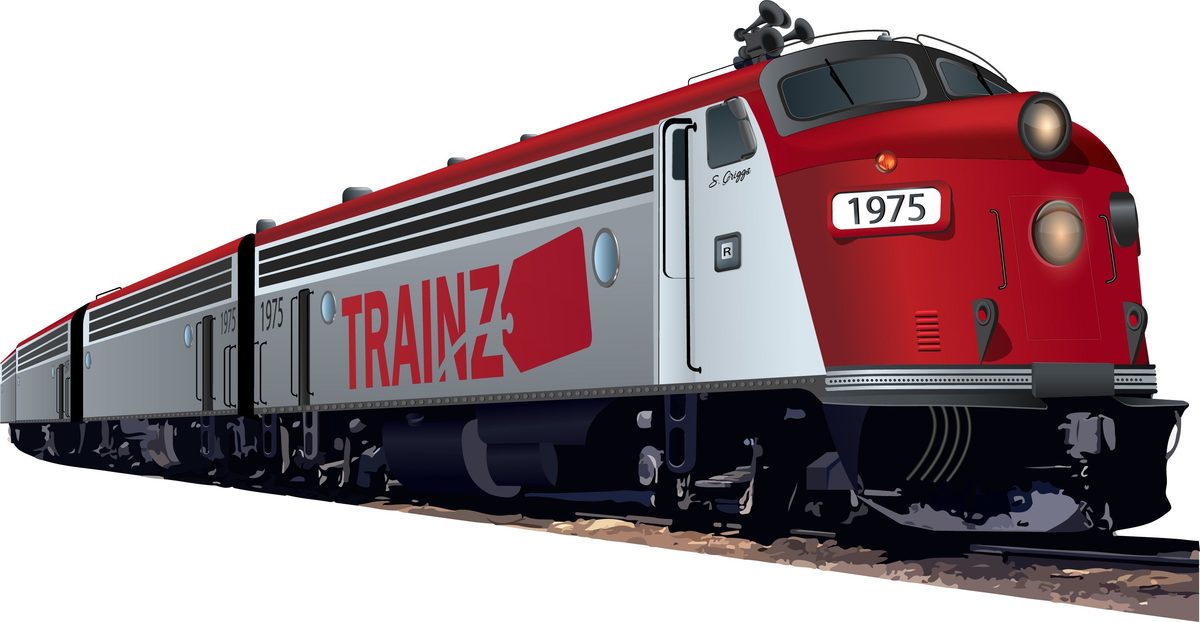
Every American O-gauge layout traces back to one guy: Joshua Lionel Cowen, the Brooklyn-born inventor who almost accidentally invented the modern toy train industry. After years of running his locomotives on my layout, I went looking for who actually started this whole thing. Here is the story.
Joshua Lionel Cowen is the man who invented the American toy train as we know it. Over a 60-year career he built Lionel from a two-person electrical-novelty workshop into the largest toy company in American history, pioneered the O-gauge standard that still dominates the hobby, and personally held over 175 patents covering everything from naval mine detonators to magnetic train couplers. His personal life was as eventful as his business life — friendships with presidents, a notorious nephew, four marriages, and a complicated legacy that the modern Lionel company is still navigating. Here is the full story of the man behind the trains, and why his fingerprints are still on every O-gauge layout running today.
The Early Years: New York, 1877
Joshua Lionel Cohen was born on August 25, 1877 in New York City, the eighth of nine children of Hyman Cohen and Rebecca Kantrowitz, Russian Jewish immigrants from Suwalki, Poland. The family lived on Henry Street on the Lower East Side, and Hyman worked as a cap maker. Joshua showed mechanical aptitude early — his first patent, granted at age 22, was for an explosive ignition fuse used in photographic flash powder. He later changed the family surname from Cohen to Cowen to ease anti-Semitic discrimination in the business world, a common practice in the era.
Cowen attended Peter Cooper Institute (now Cooper Union) but did not graduate, leaving school to work at electrical-novelty manufacturers in Manhattan. By 1899 he had perfected a battery-powered ignition mechanism that the United States Navy purchased to detonate underwater mines — Cowen's first major commercial success and the financial foundation that would let him start his own company.
The Founding of Lionel: 1900
In 1900, Cowen and partner Harry C. Grant rented a small workshop at 24 Murray Street in lower Manhattan and incorporated as Lionel Manufacturing Company. The name came from Cowen's middle name. The original product line was small electric motors and novelty items, but in late 1900 Cowen produced what is now considered the first Lionel train: a battery-powered wooden gondola car called the "Electric Express," designed not for children but as an animated window display for toy retailers. Robert Ingersoll's department store in New York was the first customer, ordering six units at $6 each.
The window display sold itself — store customers wanted to buy the trains, not the merchandise the trains were supposed to advertise. By 1903 Lionel was producing complete train sets for retail sale.
Inventing the Modern Toy Train
Through the 1900s and 1910s Cowen patented innovation after innovation that defined what a toy train was. The 2 7/8 inch gauge "Standard Gauge" in 1906 — the format that would dominate American premium toy trains for two decades. The first practical AC transformer for toy train use in 1906. The first reverse-direction electromagnetic motor in 1910. The first illuminated passenger car in 1911. The first realistic puffing smoke unit in 1946.
Cowen also pioneered marketing techniques the toy industry had never seen. The Lionel "Boy's Engineering Society" newsletter shipped to over 100,000 boys monthly by 1929. Lionel was the first toy company to advertise on television, sponsoring "The Lone Ranger" in 1949. The famous Lionel showroom on East 26th Street in Manhattan, with its working displays and three-story diorama, became a New York tourist destination.
The Standard Gauge Years
From 1906 to 1939 Lionel's flagship product line was Standard Gauge — large, heavy, hand-painted electric trains that ran on 2 7/8 inch wide track. The Lionel No. 400E, No. 392E, and No. 408E locomotives from the 1920s and 1930s are among the most prized toy train collectibles in the world today, with mint examples selling for $15,000 to $50,000. Cowen ran the company through the Great Depression by ruthlessly cutting costs while preserving quality — a balancing act that destroyed Ives Manufacturing in 1928 but Lionel survived.
The Post-War Golden Age
The years 1946 through 1959 are known to collectors as Lionel's "Postwar Era" and they were the company's commercial peak. Lionel produced over 600,000 locomotives in 1953 alone. The 027 line of smaller, more affordable O-gauge sets put Lionel under millions of American Christmas trees. By 1955 Lionel was the largest toy manufacturer in the world, with $36 million in annual sales (roughly $400 million in 2026 dollars). Cowen was on the cover of Time magazine in 1953. For more on collecting from this era see our postwar Lionel guide.
The Roy Cohn Years and Decline
In 1959 Cowen sold a controlling interest in Lionel to his nephew Roy M. Cohn — the same Roy Cohn who served as Senator Joseph McCarthy's chief counsel and who would later mentor Donald Trump. Cohn's leadership was a disaster. He diversified Lionel into chemistry sets and slot cars while neglecting the train line, ran the company into financial trouble, and was eventually forced out. Lionel passed through several owners over the next three decades before stabilizing under current ownership.
Joshua Lionel Cowen died on September 8, 1965 in Palm Beach, Florida at age 88. He never saw the resurgence of his company. He is buried in Mount Zion Cemetery in Queens.
The Legacy
Every O-gauge layout running today operates on standards Cowen invented. The 1.25-inch gauge is his. The three-rail system is his. The AC transformer is his. The puffing smoke unit, the operating coal loader, the magnetic uncoupler, the lighted passenger car — all his. When a modern Lionel Vision Line locomotive rolls past on a basement layout, it is running on Cowen's century-old infrastructure. The vibe of model trains is, at its core, the vibe Joshua Lionel Cowen invented and patented between 1900 and 1955. For more on the trains themselves see our vibe trains explained guide.
Cowen by the numbers
- 1900: Founded Lionel Manufacturing Company in Manhattan, age 23.
- 1901: First Lionel train (the "Electric Express") shipped — designed as an animated window display, not a toy.
- 1906: Standard Gauge introduced (2 1/8" gauge), the original Lionel scale.
- 1915: O-gauge introduced — the gauge that would define Lionel for the next century.
- 1923: First major catalog with full color lithograph illustrations — turned a hardware-store product into a wishlist toy.
- 1929: Lionel buys Ives Manufacturing out of bankruptcy.
- 1945: Postwar era begins. By 1950, Lionel was the largest toy manufacturer in the world.
- 1959: Cowen retires, sells the company.
- 1965: Joshua Lionel Cowen dies in Palm Beach, FL.
FAQ
Who founded Lionel Trains? Joshua Lionel Cowen, in Manhattan in 1900. He named the company after his middle name.
What did Joshua Lionel Cowen invent before trains? A safe fuse for U.S. Navy explosives (1898), and a battery-powered fan disguised as a flowerpot decoration. His pre-train fortune came from the Navy fuse contract.
Is the Cowen family still involved with Lionel? No. Cowen sold the company in 1959 to his great-nephew, and Lionel changed hands several times after — to General Mills, to Richard Kughn, to Wellspring Capital, and most recently in 2025 to Round 2.
Related guides
Newsletter
Weekly O-gauge tips & reviews
New reviews, layout ideas, and hobby news — straight to your inbox.